

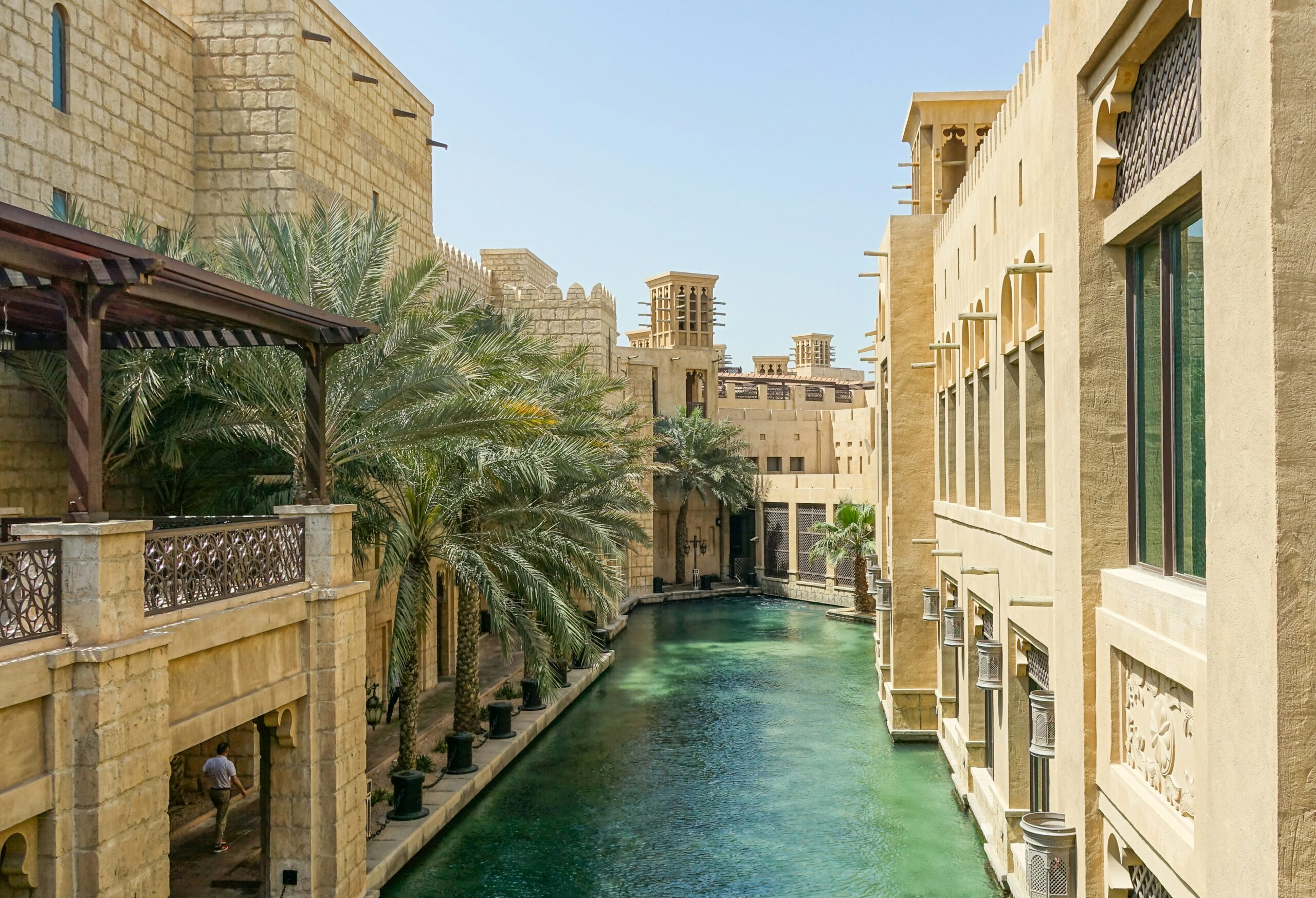
For the past decade, global interior design has been trapped in an austere loop. The prevailing aesthetic across international capitals, from the high-rises of Mumbai to the waterfront enclaves of Dubai, has defaulted to a safe, monochromatic minimalism. Bouclé sofas sit on polished grey cement, framed by bare off-white walls and recessed ceiling spotlights.
It is an aesthetic that photographs cleanly, but it often lacks soul. Stripped of cultural memory, tactile depth, and architectural bravery, these spaces can feel more like high-end airport lounges than private sanctums of living history.
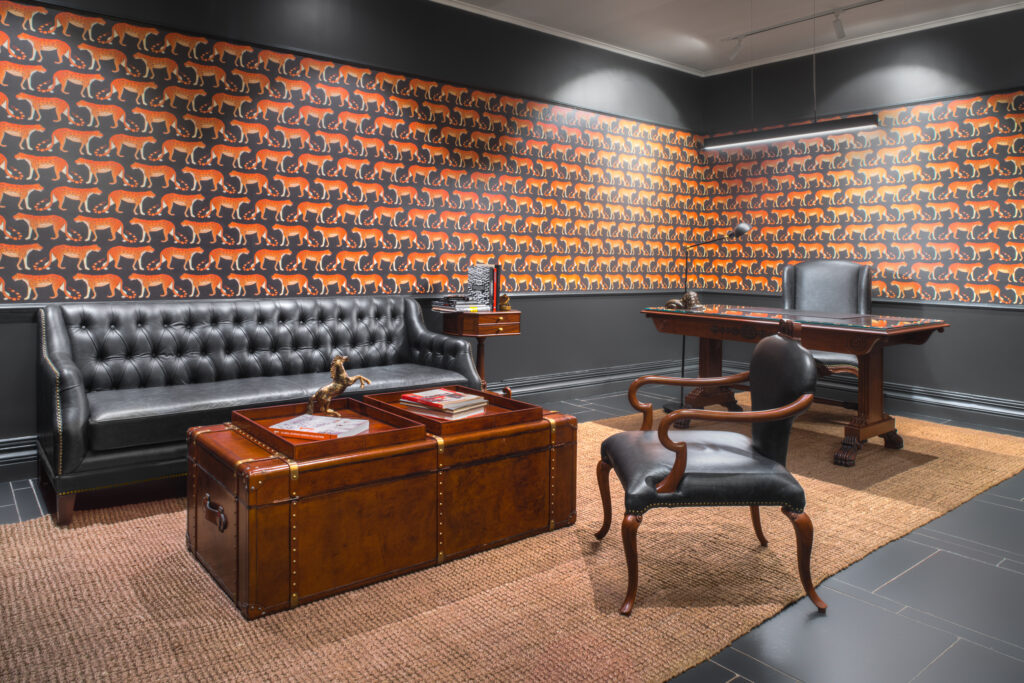
True luxury does not fear detail. In the world’s most compelling private homes, the pendulum has swung back toward Curated Architectural Maximalism, an approach defined not by arbitrary excess or clutter, but by the confident layering of rare materials, monumental scale, generational craftsmanship, and rich storytelling.
Yet, executing an opulent interior across the subcontinent and the Arabian Gulf requires far more than aesthetic courage. A design language that thrives in a sprawling farmhouse in South Delhi will suffocate inside a sun-drenched beachfront villa on Palm Jumeirah or warp in the monsoon air of North Goa if it is not fundamentally calibrated for the local climate.
Opulence without technical resilience is a short-lived illusion. Real luxury begins at the intersection of climate engineering, vernacular materiality, and unapologetic grandeur.

1. Tropical Maximalism: Crafting the Goan Sanctuary
In the emerald villages of Assagao, Siolim, and Moira, luxury is intrinsically tied to the rhythm of the landscape. Goa’s architectural vernacular—rooted in Portuguese colonial estates and Konkan courtyard houses—was never designed to be hermetically sealed behind double-glazed glass. It was meant to breathe.
Designing a maximalist villa in Goa means leaning into this dialogue between the elements and the architecture. It is an aesthetic where the jungle is invited indoors, framed by sweeping verandahs (balcões), high-volume sloping roofs, and central open courtyards (saguãos) that draw in cooling cross-breezes.
The Material & Visual Grammar
Maximalism here is earthy, tactile, and saturated. Rather than sterile white walls, spaces are anchored by:
- Exposed, stabilized laterite stone masonry and deep, hand-polished lime plaster (chunam) tinted with natural pigments like indigo, ochre, and terracotta.
- Intricate heritage flooring, combining hand-cast terrazzo embedded with raw brass dividing strips, reclaimed patterned encaustic cement tiles, and cobalt hand-painted Portuguese azulejos.
- Reclaimed timber architecture, where heavy beams of aged Burma teak and jackwood form monumental trusses, carved console tables, and soaring louvered doors.
Engineering for Monsoon and Saline Air
Coastal Goa presents an unforgiving microclimate: relentless four-month monsoons bring near-100% relative humidity, followed by searing tropical sun and corrosive salt winds. Without precise material selection, an opulent interior will deteriorate rapidly.
- Vapor Permeability Over Plastic Paints: Standard synthetic emulsions trap moisture inside walls, causing blistering and internal fungal blooms. Goan interiors require traditional lime washes or breathable silicate mineral coatings that allow walls to transpire naturally during wet months.
- Sub-Structure Protection: Moisture-resistant MDF and particleboard have no place in a coastal villa; they swell and disintegrate within seasons. Cabinetry and bespoke architectural joinery must be built from naturally oil-dense hardwoods (such as teak or rosewood) or marine-grade plywood (BWP Grade), anchored exclusively with 316-grade stainless steel or solid patinated brass hardware.
- Mildew-Resistant Layering: Sumptuous seating zones rely on solution-dyed, mildew-resistant outdoor silks, heavy Belgian linens, and moisture-treated mohair velvets, ensuring that deep jewel-toned fabrics maintain their structural integrity and vibrant pigmentation year-round.
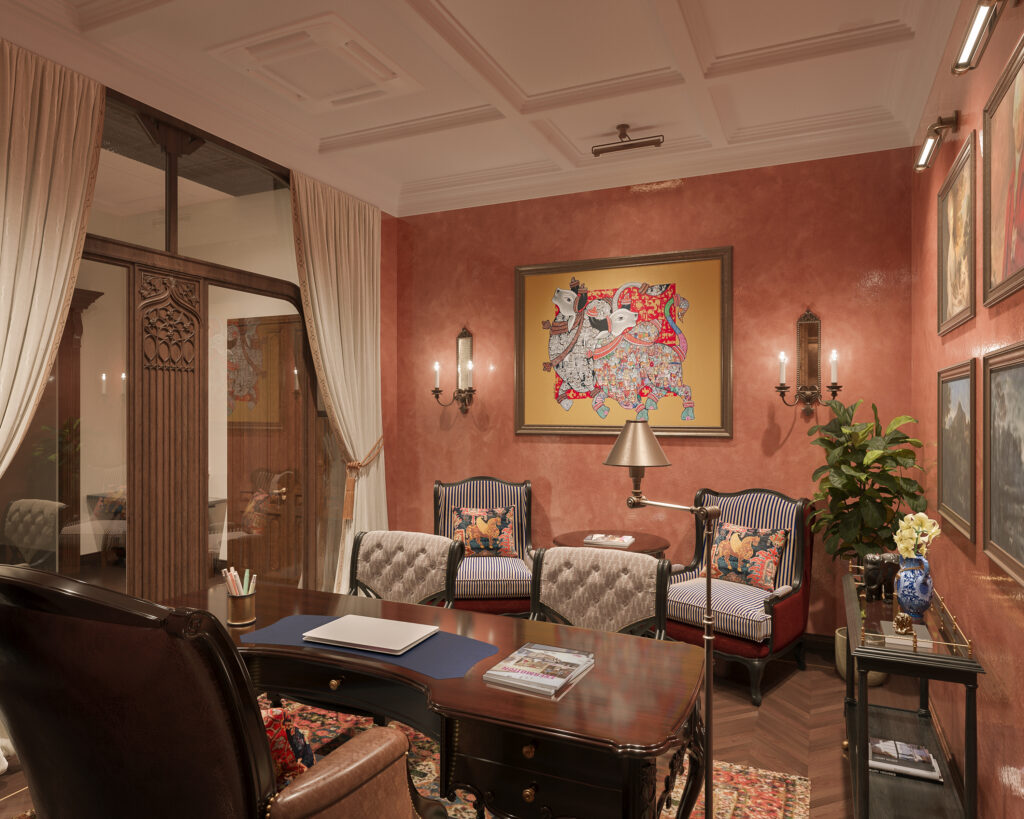
2. Urban Grandeur: The Palatial Footprints of Delhi and Mumbai
While Goa demands an effortless union with nature, the country’s primary metropolises demand spatial drama that serves the rituals of grand entertaining and cosmopolitan prestige.
The Delhi Scale: Monumental Layering
In the sprawling farmhouses of Chhattarpur and the grand residences of South Delhi, scale is the primary canvas. These homes are designed for generous hospitality, art curation, and multi-generational family life.
Here, maximalism takes on a palatial cadence:
- Stone as Structural Art: Double-height entry foyers are anchored by book-matched Italian marbles paired with bespoke pietra dura (semi-precious stone inlay) borders crafted by master artisans.
- Tactile Wall Coverings: Hand-painted silk wallpapers depicting Mughal miniature flora and fauna sit comfortably alongside heavily carved timber moldings, zardozi-embroidered acoustic panels, and antiqued bronze architectural partitions.
- Climate Calibration: Delhi’s dramatic continental climate swings from near-freezing winter dry spells to 45°C summer dust storms. To protect delicate oil paintings, antique tapestries, and bespoke wood finishes, high-volume ducted HVAC systems are integrated with commercial-grade hospital-level HEPA filtration and automated humidity balancing, discreetly hidden behind ornamental cornices.
The Mumbai High-Rise: Vertical Sophistication
In Mumbai’s coastal penthouses across Worli and South Mumbai, luxury contends with limited footprints, soaring ceiling heights, and sea-facing vistas.
- Art Deco Resurgence: Mumbai boasts one of the world's richest collections of Art Deco architecture, and its most refined interiors reflect this heritage. The look embraces geometric brass inlays, fluted burr walnut paneling, and scalloped mirrors that bounce sunlight deep into floorplates.
- Balancing Marine Exposure with Glamour: Floor-to-ceiling glass captures the Arabian Sea, but ocean-facing balconies and coastal air cause rapid oxidation on metal finishes. Architectural metalwork—from door pulls to decorative screens—must receive electroplated, PVD-coated, or marine-lacquered treatments to prevent unsightly pitting, ensuring that polished brass and deep bronze finishes retain their luster against the salt mist.
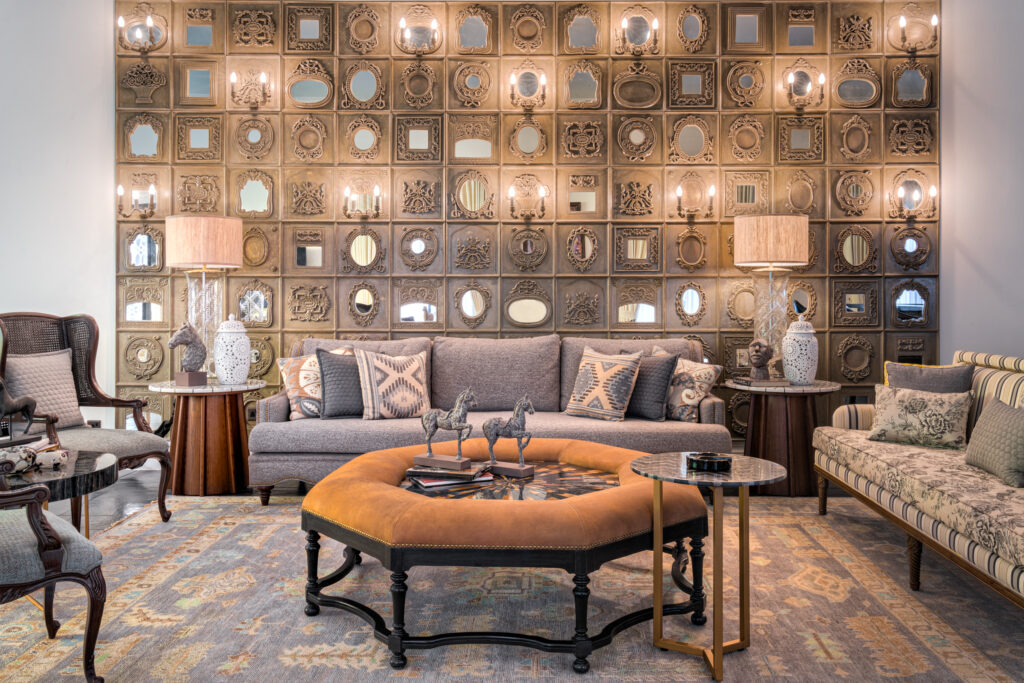
3. Desert Monumentalism: The Dubai Estate
Across the Arabian Gulf, in the exclusive avenues of Emirates Hills, Mohammed Bin Rashid City, and along the shoreline of Palm Jumeirah, residential architecture operates on a monumental scale. Private estates regularly feature ceilings soaring between 6 to 9 meters and vast open-plan layouts that can quickly feel cold, hollow, and cavernous if approached with timid design.
Desert maximalism is the antidote to spatial emptiness. It is about balancing monumental scale with deep, tactile intimacy.
The Architectural Vocabulary
- Monolithic Stone Slabs: Massive, vein-matched slabs of exotic quartzites (such as Patagonia or Cristallo) serve as floor-to-ceiling accent walls, backlit to highlight natural crystal formations.
- Dramatic Vertical Interventions: Grand volumes are brought down to human scale through multi-tiered custom crystal and hand-blown glass chandeliers, sculptural two-sided stone fireplaces, and floor-to-ceiling fluted cast glass screens that zone private lounges from formal dining halls.
- Rich, Sculptural Textures: To counteract the glare of the desert sun, palettes rely on deep charcoal, rich lapis, burnished gold, and champagne bronze, paired with hand-knotted silk-and-wool carpets that anchor conversation areas and dampen acoustic reverberation.
Mastering Solar Heat Gain and HVAC Dynamics
The Gulf’s desert climate—marked by ambient temperatures exceeding 45°C and intense solar radiation—demands uncompromising architectural discipline.
- UV Shielding & Solar Gain: Sunlight contains destructive UV rays that bleach rare veneers, fade rich upholstery, and degrade fine artwork within months. Maximalist Dubai estates require low-iron architectural glass paired with high-performance UV-filtering coatings and dual-layer automated shading pockets hidden within ceiling reveals.
- Thermal Shock & Stone Condensation: When a villa is cooled to 20°C inside while outdoor humidity spikes along the coastline, thermal bridging can cause cold stone walls and floors near entryways to collect moisture. Mechanical systems must be engineered with low-velocity, constant-volume ducted cooling and dedicated fresh air handling units (FAHU), ensuring precise dew-point control that keeps surfaces dry and comfortable.
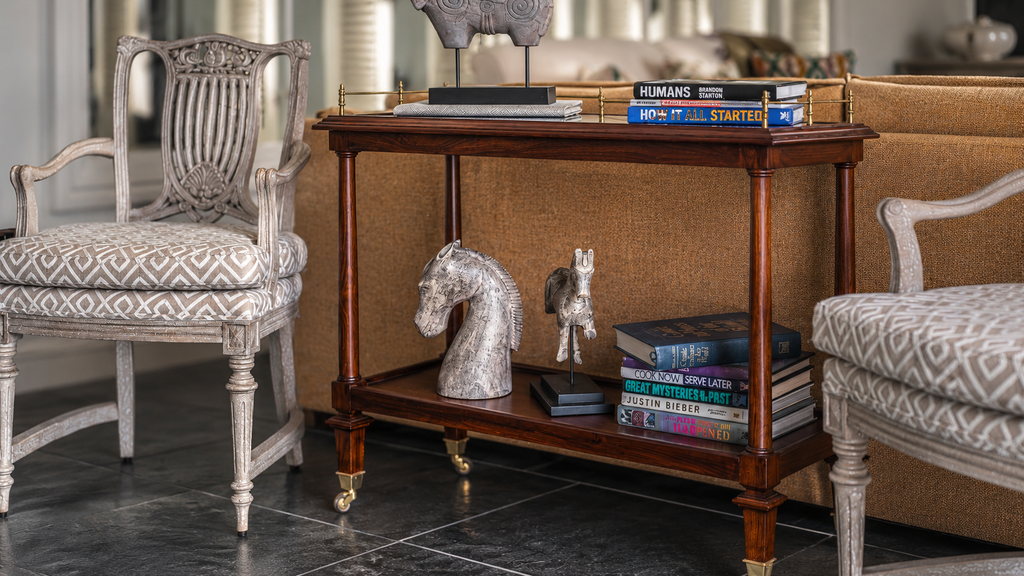
4. The Turnkey Advantage: Sourcing, Provenance, and Delivery
True architectural maximalism cannot be ordered out of a European furniture catalog. When an interior depends on unique character and cultural depth, off-the-shelf luxury pieces quickly reveal their limitations—they lack narrative and rarely withstand diverse environmental demands.
A bespoke estate requires end-to-end design provenance.
| Region of Origin | Specialized Craft Cluster | Architectural Application |
| Makrana & Udaipur | Master Stone Sculptors | Custom hand-carved stone fireplaces, pietra dura tabletops, and fluted marble pillars |
| Moradabad & Jodhpur | Brass, Bronze & Metal Artisans | Bespoke decorative screens (jaalis), hand-beaten hardware, and sculptural dining bases |
| Saharanpur & Kashmir | Generational Joiners & Weavers | Solid hardwood cabinetry, relief-carved timber doors, and hand-knotted silk-wool carpets |
| Murano & Florence | Master Glassblowers & Lacquerers | Site-specific statement lighting installations and high-gloss bespoke cabinetry fronts |
Bridging these artisanal workshops with international sites requires white-glove logistical execution:
- Full-Scale Dry-Laying: Before precious marble, quartz, or terrazzo tiles are shipped to a residence in Dubai or Mumbai, entire slab layouts are dry-laid in factory staging yards to verify vein continuity, tone balance, and precision cutting.
- Controlled Climate Manufacturing: Bespoke millwork and furniture pieces destined for humid coastal climates or hyper-arid desert zones are manufactured in climate-controlled environments, seasoned to the equilibrium moisture content (EMC) of their final destination to prevent warping, cracking, or joint separation.
- End-to-End Customs & Turnkey Fit-Outs: Delivering high-value, bespoke interior architecture across national boundaries requires coordinated logistics—from white-glove crating and overseas container shipping to navigating local developer mandates (such as Nakheel, Emaar, or local municipal authorities) without diluting the artistic vision.
The Art of the Living Heirloom
A truly luxurious home is never a static showroom. It is an expressive heirloom—a layered, sensory environment that reflects the journeys, heritage, and ambitions of those who inhabit it.
Whether it is an open-air sanctuary overlooking the Chapora River, a curated duplex above the Mumbai skyline, or a monumental waterfront residence on the Palm, embracing maximalism allows a home to make an enduring statement: one where historical craft, spatial bravery, and environmental engineering stand together in effortless harmony.
Transform Your Private Residence
Our design studios in Delhi and Goa lead comprehensive, turnkey interior architecture and bespoke fit-outs for discerning homeowners across India and the United Arab Emirates. To discuss private commissions, portfolio previews, or site feasibility, contact our principal design studio to schedule a confidential consultation.