

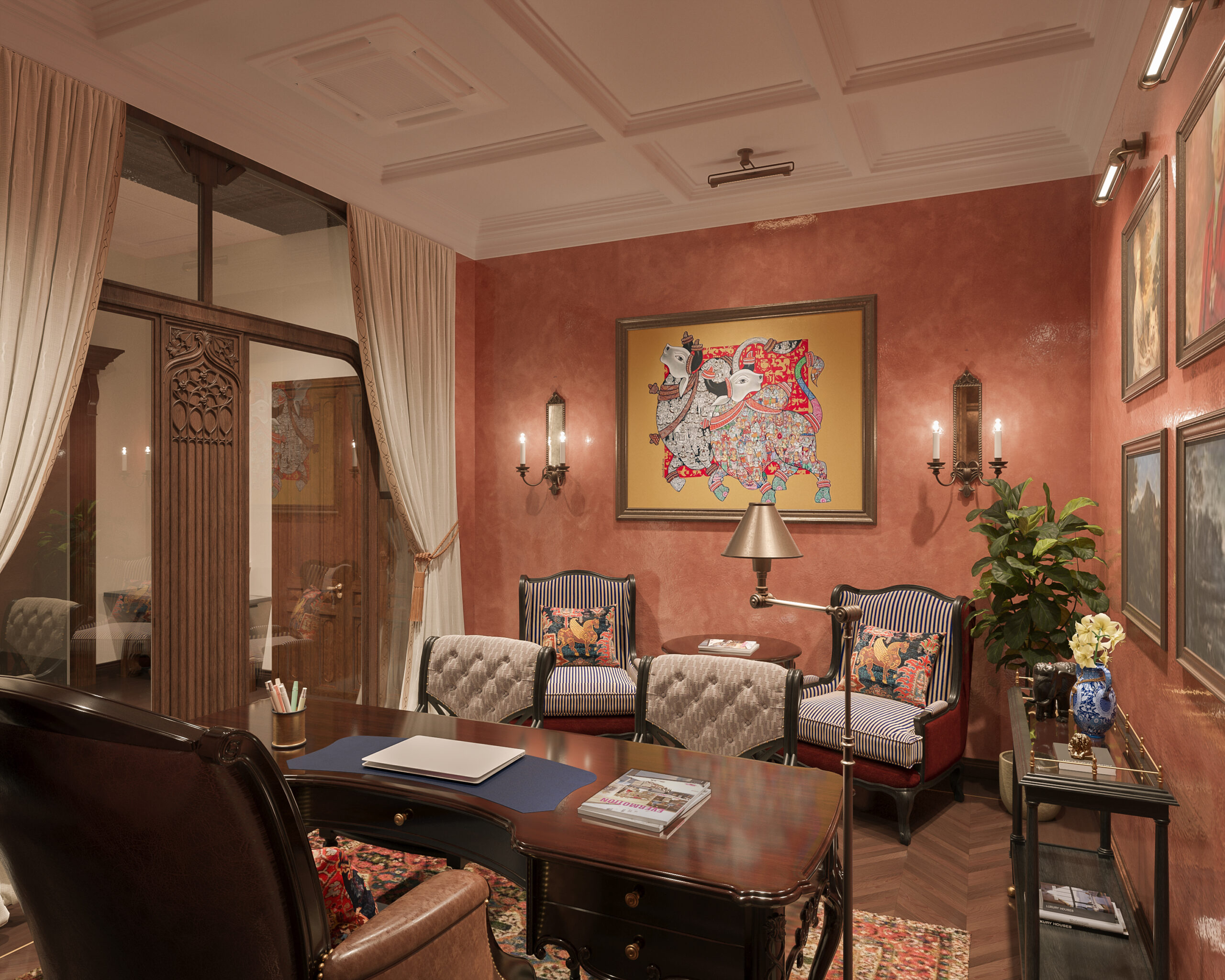
Luxury interiors in India are entering a more expressive phase in 2026. After years of international minimalism, designers and homeowners are increasingly embracing Indian craftsmanship, layered materials, richer colour, bespoke furniture and architecture that responds to local climate and culture.
This movement is best described as a new Indian maximalism—not maximalism as clutter, but as curated abundance.
The Shift from Performative Minimalism to Expressive Grandeur
Minimalism, though it was elegant, often erased context. A penthouse in Gurgaon looked indistinguishable from an apartment in London or a condo in Manhattan. Modern patrons of luxury architecture are no longer content with anonymous luxury. They seek living environments that reflect their personal journeys, global achievements, and cultural roots.
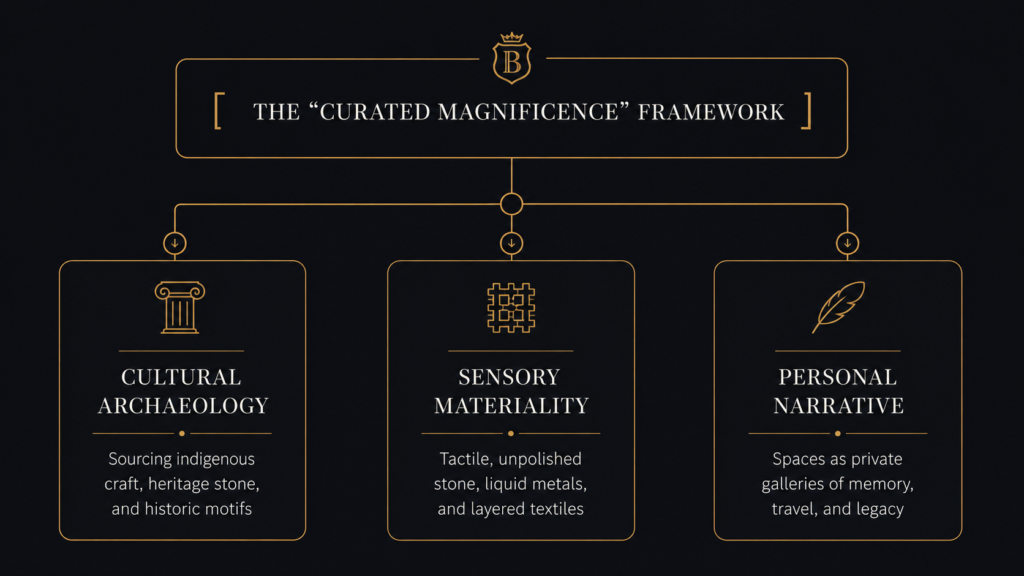
To guide this new paradigm, Bottega Di Lusso operates on the Curated Magnificence Framework. This philosophy views interior design through three core pillars:
- Cultural Archaeology: Reclaiming heritage crafts—from hand-carved stone portals to silver-gilt trims—and recontextualizing them within contemporary structural frameworks.
- Sensory Materiality: Prioritizing raw, tactile materials that age gracefully over artificial, glossy veneers that lose their lustre over time.
- Personal Narrative: Transforming residential spaces into living museums that store personal achievements, art collections, and inherited family legacies.
Trend 1: The Renaissance of Indian Maximalism — Living Museums of Success
Indian Maximalism is hardly a new concept. It is the natural aesthetic of a subcontinent historically celebrated for its courtly grandeur, vibrant textiles and intricate architectural detail. What is emerging today is a deeply refined, modern interpretation of this style.
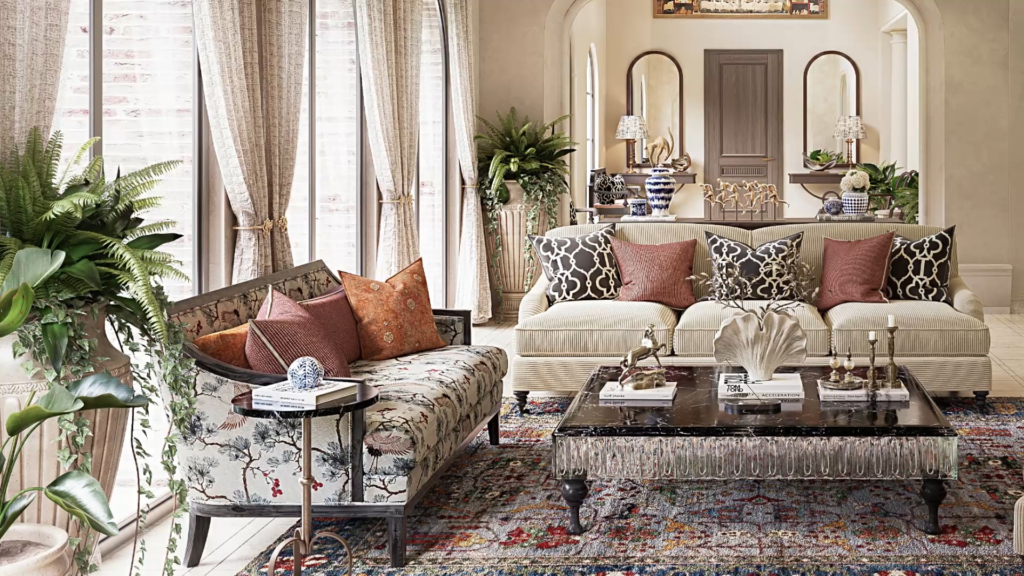
Storytelling Through Architectural Layering
Far from chaotic overcrowding, contemporary Indian Maximalism is defined by architectural discipline. It uses rich layering—combining coffered ceilings, wainscoting, dramatic drapes, and textured wall coverings—to create depth without visual clutter. Every room is designed as a series of vistas, where every turn reveals a curated object, a hand-carved detail, or a piece of fine art.
Artisanal Heritage Integration: Pichwai, Inlay, and Silver-Gilt
At the heart of this movement is a return to indigenous master craftsmanship. We are seeing a surge in bespoke commissions of traditional art forms reimagined at monumental scales:
- Monolith Pichwai Murals: Traditional Rajasthani devotional art painted directly onto large-scale gilded plaster panels or raw silk wall coverings.
- Pietra Dura (Parchin Kari): Semi-precious stones like lapis lazuli, malachite, and jasper inlaid into dark Italian marbles to form intricate geometric or floral narrative bands across flooring and vanity fronts.
- Silver-Gilt and Aged Brass Detailing: Replacing cold chrome with warm, hand-beaten silver leaf, antiqued brass, and bronze trims along door frames, cabinetry, and fireplace surrounds.
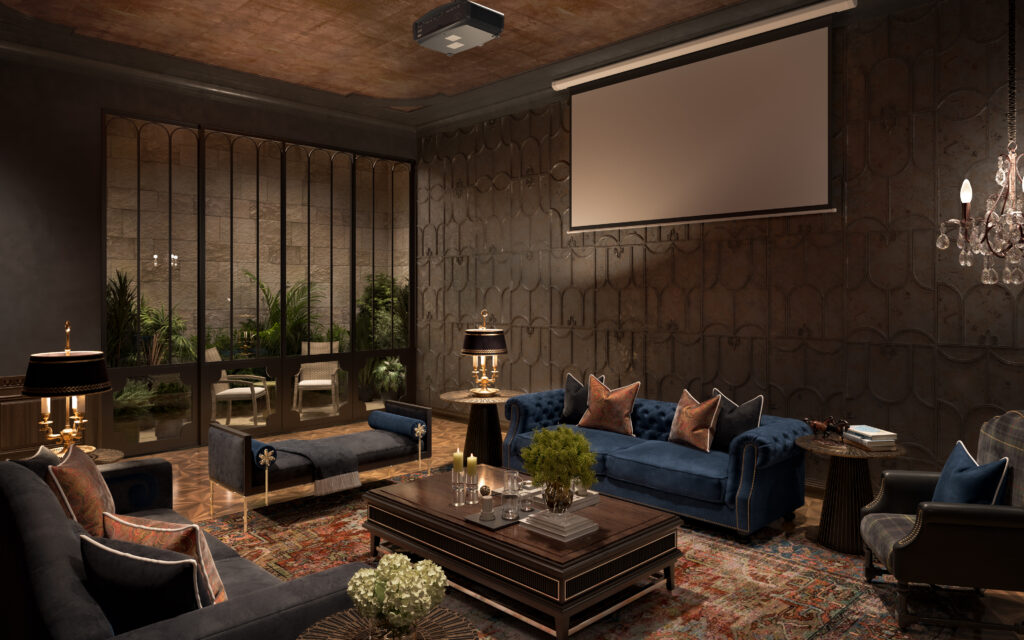
Harmonizing European Silhouettes with Indian Soul
The signature of Bottega Di Lusso’s maximalist approach lies in balance. By placing clean-lined European furniture silhouettes—such as sleek Italian leather sofas or French neo-classical tables—against a backdrop of rich Indian architectural craft, the result feels timeless, cultured, and distinctly global.
Trend 2: Monolithic Stone Sculpting & Architectural Tactility
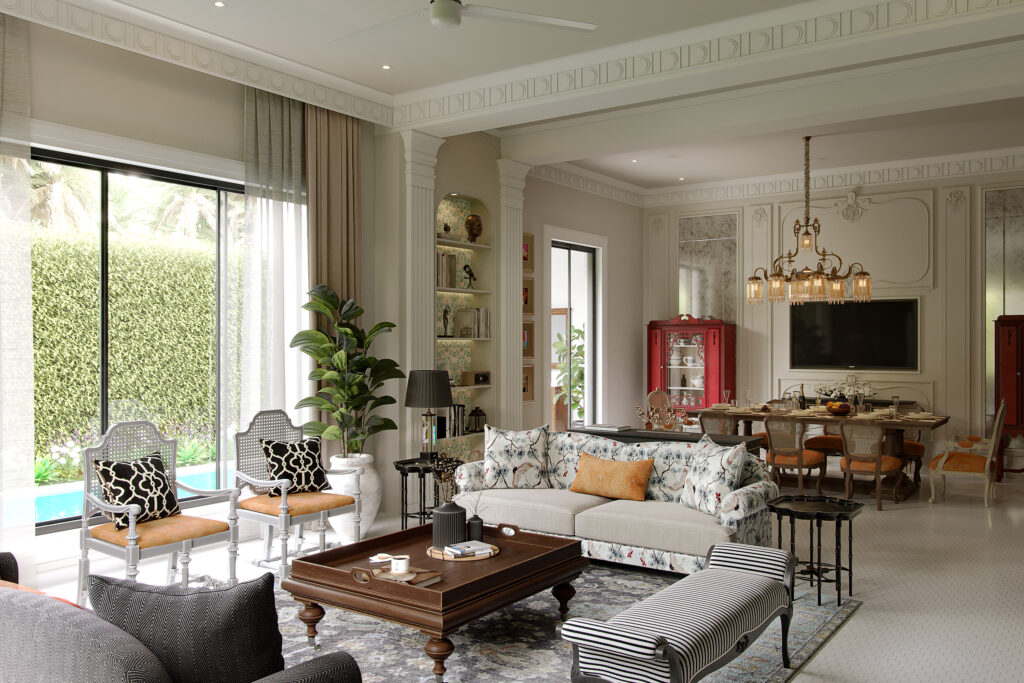
The era of polished, flat floor tiles is giving way to three-dimensional stone masonry. Stone is no longer treated merely as a surface finish. It is carved, fluted and sculpted into an integral part of the home's architecture.
Fluted Masonry, Hand-Carved Portals, and Raw Marbles
Architects and interior designers are using heavy stone elements to create a sense of permanence and grounding. Deeply fluted travertine walls, hand-carved Makrana marble archways, and massive, single-block stone vanity islands are becoming focal points in luxury homes.
Material Selection Matrix
To assist patrons in selecting materials that balance aesthetic depth with longevity, we have compiled this comparative guide:
| Material Archetype | Visual & Tactile Profile | Best Suited Applications | Longevity & Aging |
| Makrana Pure White Marble | Translucent crystalline structure, subtle grey veining, soft hand-polished finish | Grand entrance portals, private mandir pavilions, feature staircases | Impervious to age; develops a rich historic patina over generations |
| Fluted Iranian Travertine | Warm earthy beige, deep linear channels, open-pore matte texture | Feature walls, double-height fireplace surrounds, accent corridors | Extremely durable; ages beautifully with natural weathering |
| Pietra Dura Inlay on Black Marquina | Deep obsidian stone contrasted with iridescent mother-of-pearl and lapis lazuli | Formal dining table tops, bar credenzas, powder room accent walls | Requires delicate artisan care; holds immense heirloom value |
| Rough-Hewn Kota Stone | Deep olive-grey tones, tactile split-face texture, natural matte grain | Outdoor loggias, courtyard perimeter walls, pool lounges | Weatherproof; matures into a rich, darker patina over time |
Trend 3: Biophilic Sanctuary Architecture & Courtyard Micro-Climates
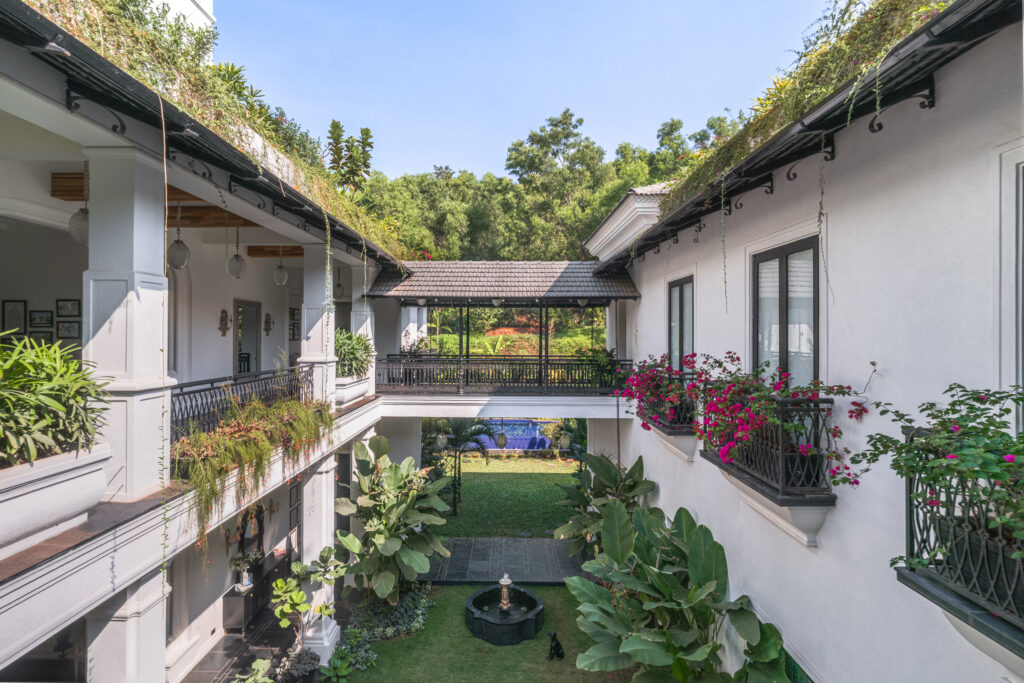
In response to urban density and environmental stress, luxury residences in India and Dubai are turning inward. Homes are increasingly built around climate-controlled natural sanctuaries that seamlessly blend indoor and outdoor living.
Modern Evolution of the Traditional Indian 'Chowk'
The ancient Chowk (central courtyard) is making a comeback as a core organizing element in contemporary mansions. By placing a green atrium or water feature at the center of the floor plan, homes benefit from natural stack-effect cooling, soft daylighting, and private green views from every room.
Regional Climate Adaptations
- Delhi NCR (Farmhouses & Estates): Double-glazed glass conservatories and heated winter verandas that protect lush indoor tropical gardens during cold winters while providing shaded cooling during summer months.
- Goa (Coastal & Heritage Villas): Open-air loggias, wide roof overhangs, local laterite stone masonry, and polished terrazzo floors that encourage natural cross-ventilation and withstand high coastal humidity.
- Dubai (Sky Penthouses & Villas): Fully climate-controlled glass-roofed courtyards featuring indoor waterfalls, rare palm species, and skylights that bring natural daylight into subterranean wellness suites.
Trend 4: Emotional Lighting & Atmospheric Volumetrics
Lighting in high-end interiors has evolved far beyond practical illumination. It is now treated as a key architectural material that shapes mood, highlights textures, and enhances well-being.
Museum-Grade Illumination & Circadian Spectrum
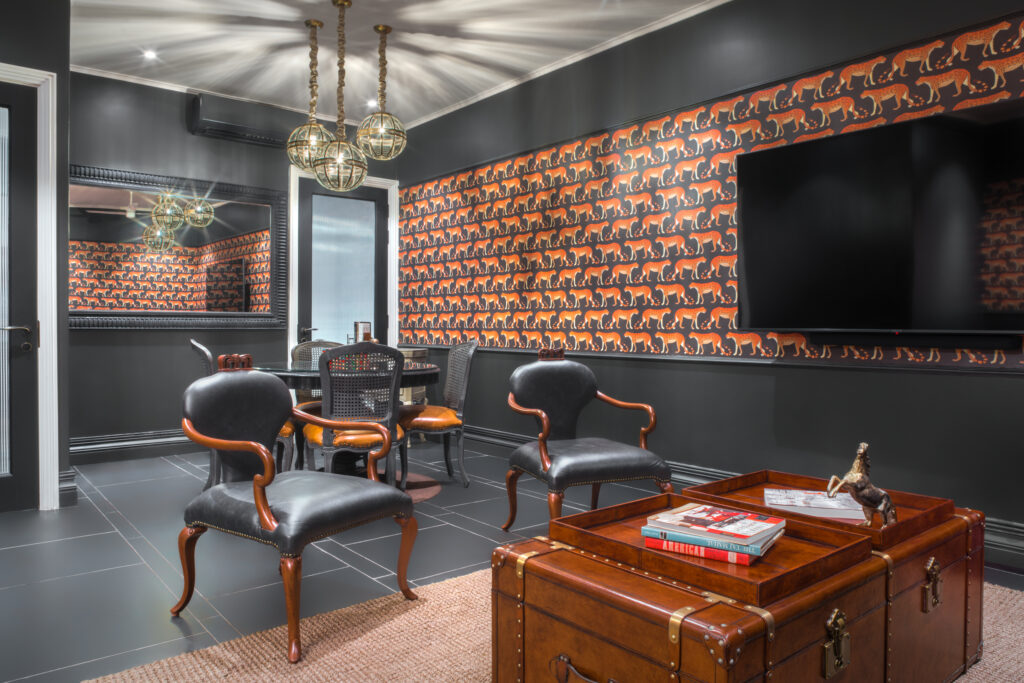
Today's luxury residences use narrow-beam, museum-grade spotlighting to illuminate fine art and textured stonework without flooding the entire room in light. Smart lighting systems automatically adjust color temperatures throughout the day—shifting from energizing daylight tones in the morning to soft, warm amber glows in the evening to support natural circadian rhythms.
Light Fixtures as Sculptural Art
Oversized chandeliers are no longer limited to classic crystal designs. Custom-commissioned installations made from hand-blown glass, patinated bronze, sculpted alabaster, and liquid brass function as striking art pieces during the day, before casting warm, atmospheric light at night.
Trend 5: Artisanal Bespoke & Collectible Design
The modern UHNWI client is moving away from off-the-shelf luxury furniture catalogs. True luxury is increasingly defined by rarity, customization, and piece-by-piece commissioning.
Moving Beyond Mass-Produced European Luxury
While Italian and French design houses maintain their reputation for quality, discerning homeowners prefer one-of-a-kind creations. At Bottega Di Lusso, we collaborate directly with traditional stone carvers, master carpenters, and metal artisans to design bespoke furniture, custom door hardware, and unique architectural features tailored specifically to the client's home.
Cross-Regional Adaptability Guide
Translating these trends across different geography-specific luxury property types requires a nuanced approach to materials, climate, and lifestyle:
| Trend Application | Delhi NCR (Sprawling Farmhouses) | Goa (Luxury Coastal Villas) | Dubai (Sky Penthouses & Villas) |
| Maximalist Color Palette | Rich jewel tones, deep emeralds, ruby velvets, carved teakwood paneling | Tropically-inspired hues, terracotta, woven cane, brass, breezy linens | Champagne metallics, smoked mirrors, rich suede, soft alabaster |
| Material Focus | Solid Makrana marble, hand-carved stone facades, aged bronze trim | Local laterite stone, reclaimed teak, polished cement terrazzo | Calacatta marble monoliths, liquid metal accents, tinted glass |
| Indoor-Outdoor Flow | Heated glass conservatories, landscaped courtyard lawns | Wide open loggias, infinity pools, lush garden courtyards | Climate-controlled indoor gardens, skyline terrace lounges |
The UHNWI Client Guide: How to Commission a Generational Sanctuary
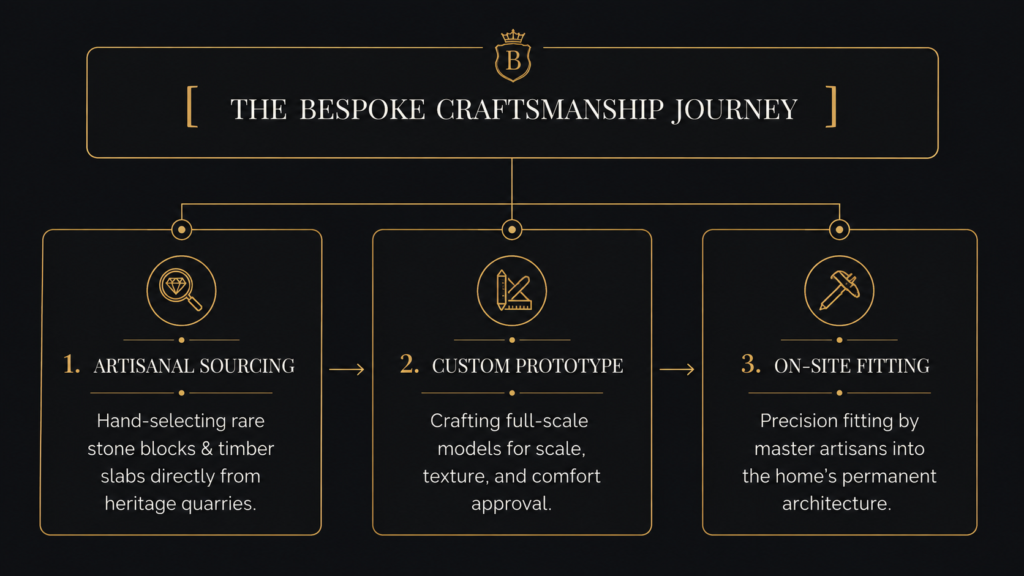
Designing a high-end luxury residence is a deeply personal journey. For patrons seeking to create a home that endures for generations, we recommend a structured, three-phase commissioning process:
- Spatial Narrative & Heritage Discovery: Begin by identifying your personal story. Document your travel memories, art collections, family heirlooms, and lifestyle habits. This forms the blueprint for your home's unique narrative.
- Artisanal & Architectural Sourcing: Work with your design atelier to select authentic, raw materials early in the project. Commissioning rare stone blocks, hand-woven textiles, and bespoke art pieces takes time and should be integrated into the core architectural plans.
- Precision Fitting & Curation: Ensure that every custom piece is fitted with architectural precision. The final layer—combining curated lighting, fine art, and soft furnishings—transforms a luxury house into a warm, soulful home.
Frequently Asked Questions
Indian Maximalism is an opulent design approach that combines traditional Indian craftsmanship—such as marble inlay, hand-carved stonework, and commissioned heritage art—with clean European architectural proportions. It focuses on story-driven spaces, rich textures, and thoughtful layering that reflect the personal journey of the resident.
Luxury interior design is moving away from cold, minimalist aesthetics toward expressive, character-rich spaces. Key emerging trends include Indian Maximalism, monolithic stone sculpting, climate-controlled indoor courtyards, atmospheric lighting, and one-of-a-kind commissioned furniture.
Bottega Di Lusso tailors every project to its local environment and architectural style: using rich jewel tones and carved woods for Delhi farmhouses, weather-resistant teaks and open loggias for Goa coastal villas, and monolithic marbles and climate-controlled indoor gardens for Dubai sky penthouses.