

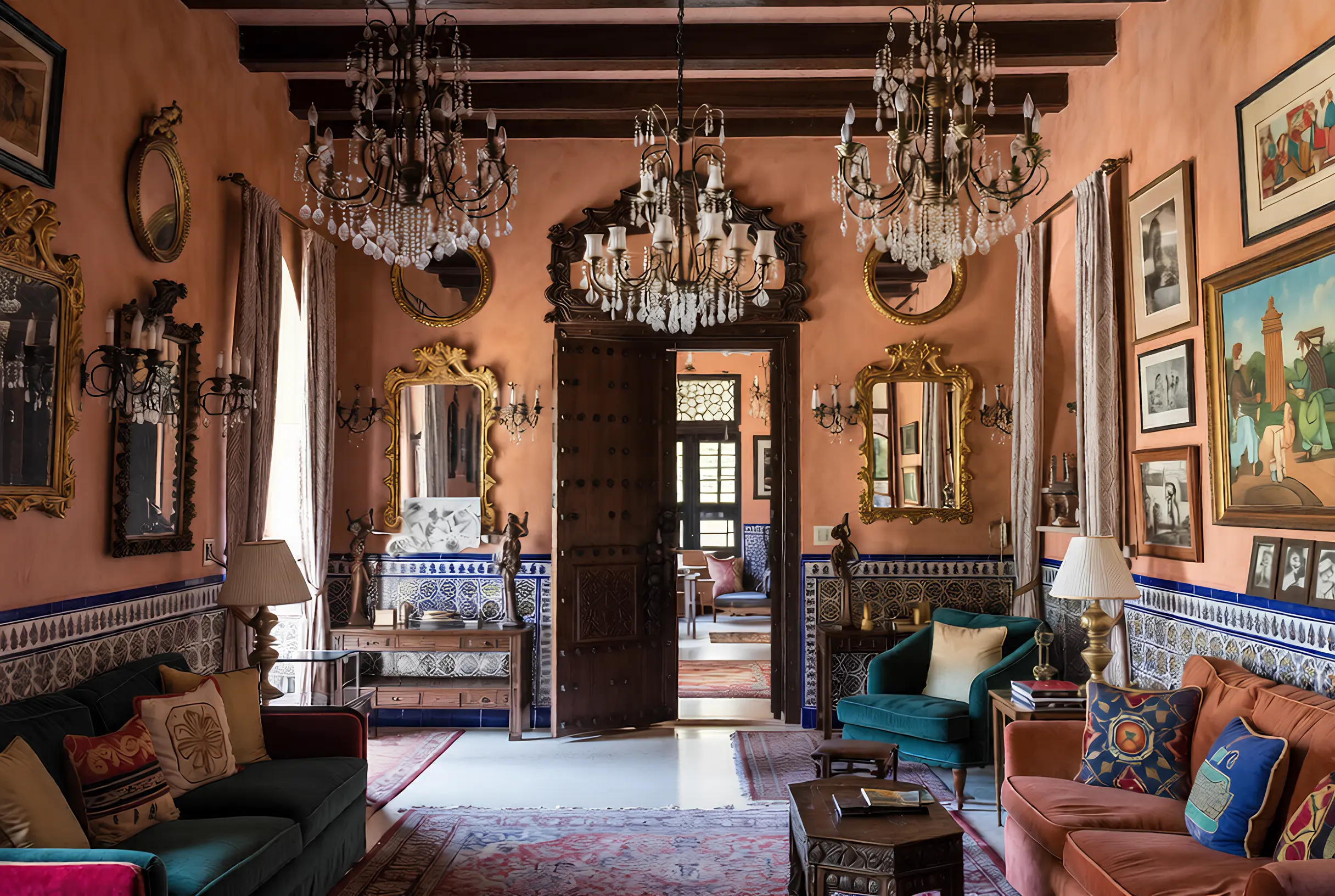
To walk through a grand Goan manor is to witness a centuries-long conversation between Lisbon and Loutolim — a dialogue written in laterite stone, Mother of Pearl shells, and hand-carved rosewood. In the world of high-end design, Goa is often reduced to a postcard of tropical chic, yet for those with a more discerning eye, it offers something far more profound. It is the birthplace of a truly unique aesthetic: Goan Colonial.
At Bottega Di Lusso, we view a home not merely as a residence, but as a collector’s masterpiece. While the contemporary design world seems currently adrift in a sea of sterile minimalism, the Goan spirit demands the opposite. It demands opulent maximalist interiors that celebrate the friction between Indian heritage and European grace.
The Goan Colonial style is an architectural marriage of necessity and vanity. It was born from the Portuguese desire for the familiarity of home, filtered through the hands of master Indian artisans who infused every arch and balustrade with local soul. As a luxury atelier, our mission is to reclaim this narrative. We believe that true luxury is not found in the quiet, but in the bold, curated layers of history, symbolism, and unapologetic grandeur that define the most exclusive circles of Indian and international society.
The Historical Crucible: Where East Kissed West
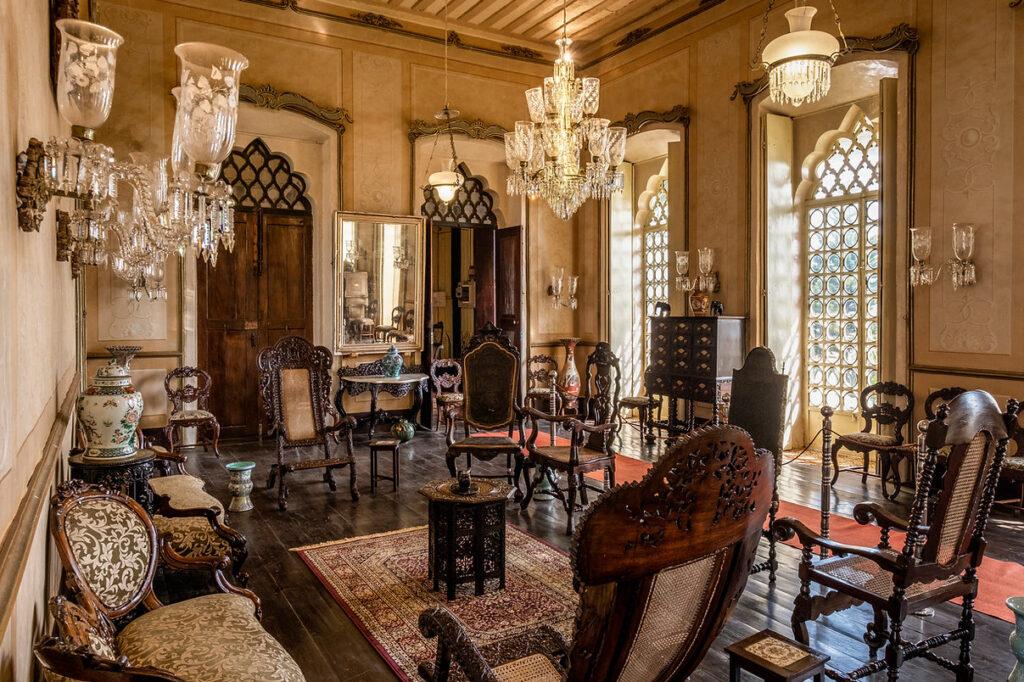
The Goan Colonial aesthetic did not emerge from a desire for subtlety. It was born from a collision of empires. When the Portuguese established their presence in the 16th century, they brought with them the architectural blueprints of Mediterranean Europe—Baroque flourishes, Manueline details, and an obsession with verticality. However, the true alchemy happened when these European ideals met the skilled hands of Goan craftsmen.
Initially, Goan architecture was defined by the Casas de Sobrado—sturdy, defensive structures built for survival. But as wealth flowed through the ports and a new class of landed gentry emerged, the "fortress" gave way to the "palace." This was the era of the great Goan Manor, or Palácio. Unlike the stark, minimalist trends of the modern day, these homes were designed to telegraph power. They were the original opulent maximalist interiors, long before the term was coined by modern designers.
What makes this period so relevant to the Bottega Di Lusso philosophy is the shift from the functional to the ornamental. The Portuguese provided the silhouette, but the Indian soul provided the texture. Local laterite stone was dressed in lime wash, and traditional Indian courtyards (chowks) were integrated into European floor plans. This wasn’t a compromise; it was a curation.
For the modern powerhouse—the industrialist or the celebrity—this history provides a blueprint for contemporary living. Just as the elite of the 17th century commissioned master artisans to create one-of-a-kind estates, our luxury atelier views each project as a historical continuation. We don't just build walls; we build a narrative of patronage that echoes the grandeur of Goa's golden age.
Architectural Bones: The Anatomy of a Goan Manor
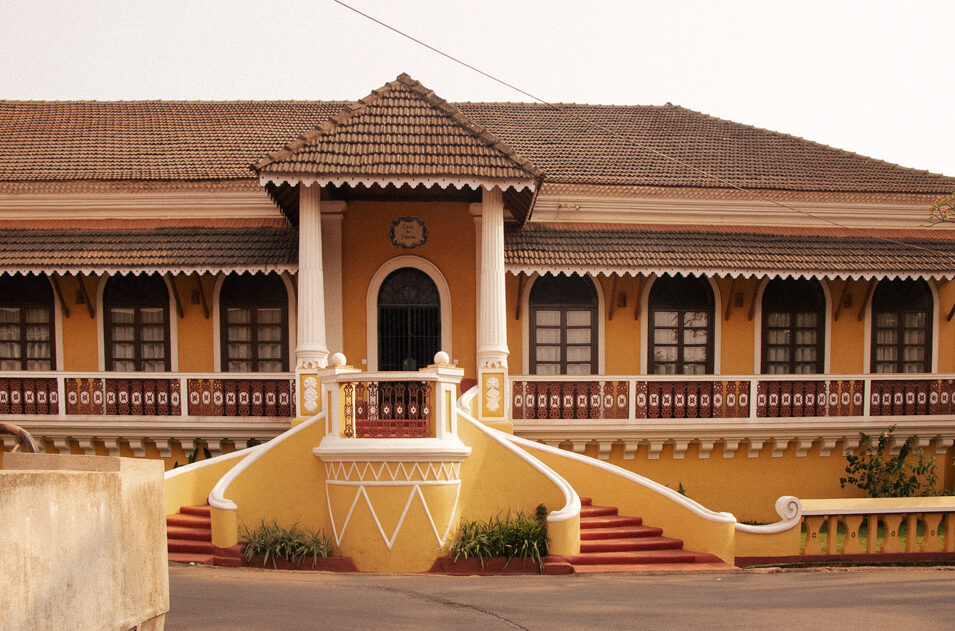
The most defining feature—the architectural overture, if you will—is the Balcão. In any other culture, it might be called a porch; in Goa, it is the social heart of the home. These wide, covered verandas with built-in stone seats (sofas) were designed for the "see and be seen" culture of the elite. At Bottega Di Lusso, we treat the Balcão as a stage for hospitality, often reimagining it with hand-carved stone balustrades and custom-patterned flooring that signals the grandeur of the interiors within.
Then, there is the legendary Mother-of-Pearl windows. In an era before the ubiquity of glass, Goan masters used thin, polished oyster shells (nacre) set into wooden lattices. The result is a soft, ethereal filtration of the harsh tropical sun, bathing the rooms in a pearlescent glow that no modern curtain can replicate. This is the essence of opulent maximalist interiors: a marriage of nature’s bounty and human craftsmanship.
Inside, the anatomy shifts toward the operatic. High, vaulted ceilings—often finished in exposed timber—provide more than just a sense of scale; they are a masterclass in tropical ventilation. In our atelier, we elevate these "bones" by integrating bespoke metal-work and grand, hand-wrought chandeliers that draw the eye upward, celebrating the sheer volume of the space. We don’t just build to house people; we build to house aspirations. For our exclusive circle of clients, these architectural elements are the canvas upon which we layer the textures of a life well-lived.
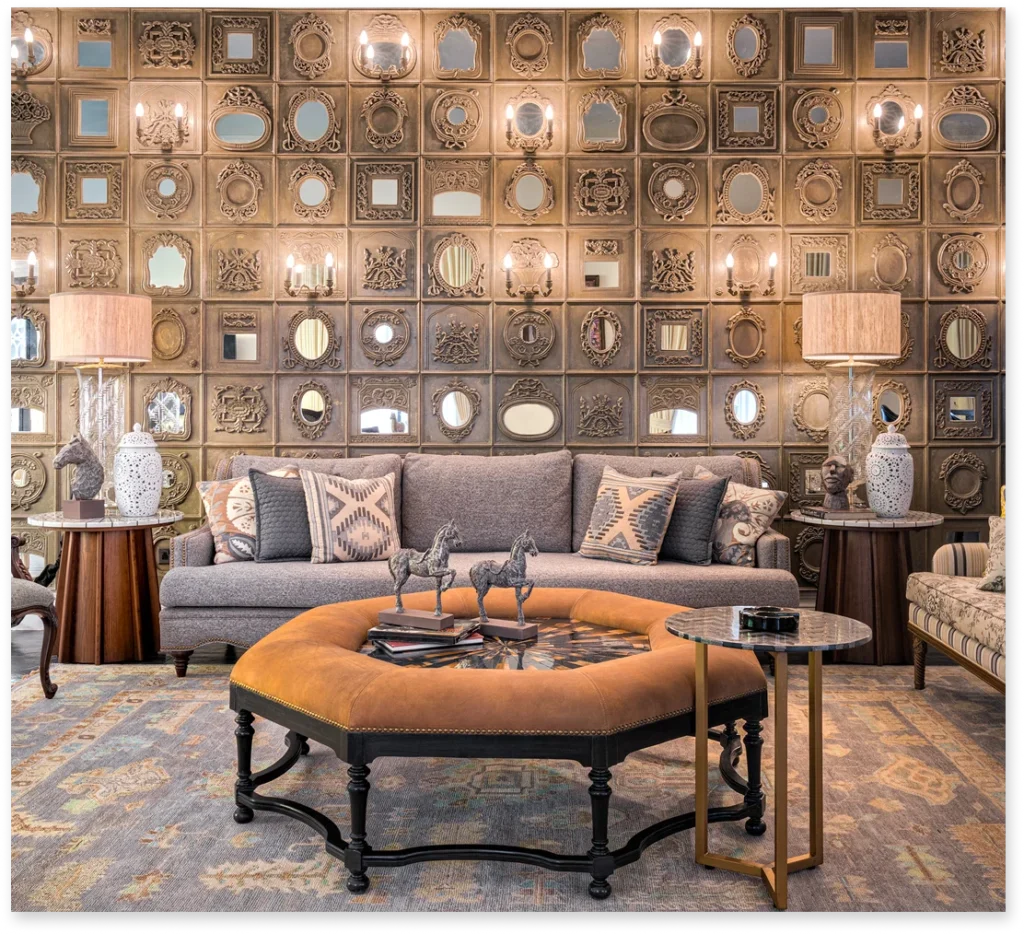
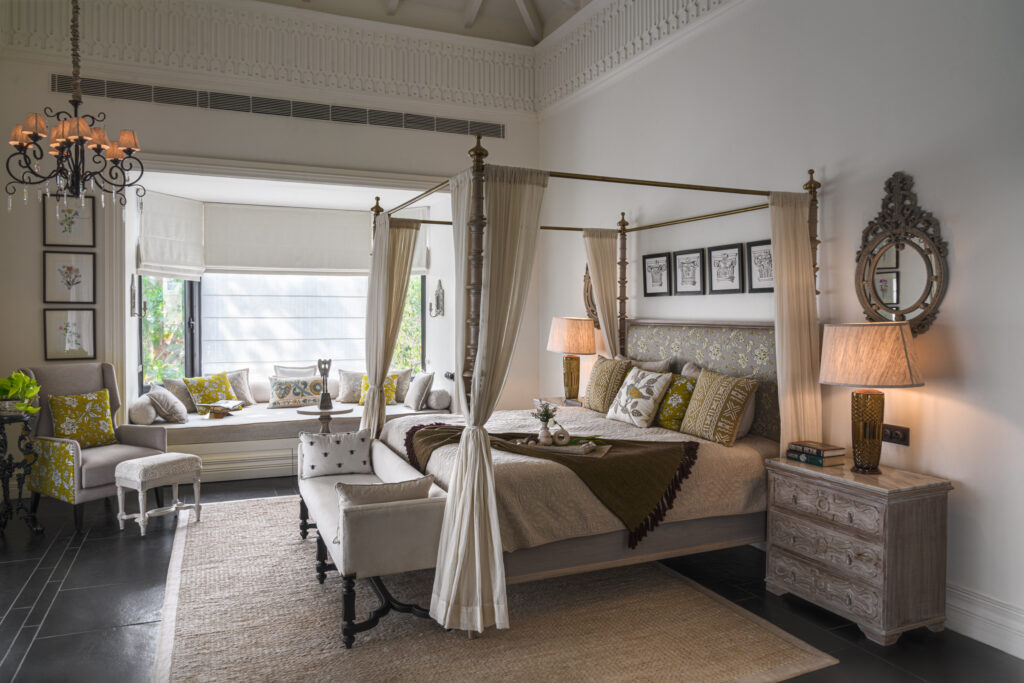
The Interior Narrative: Indian Soul, European Silhouette
The interior of a Goan manor is where the intellectual and the aesthetic collide. It is a space designed for the long, humid afternoons of the tropics, yet dressed with the formality of a continental salon. If the architecture is the body, the interior is the spirit—a spirit that is restless, cultured, and profoundly maximalist.
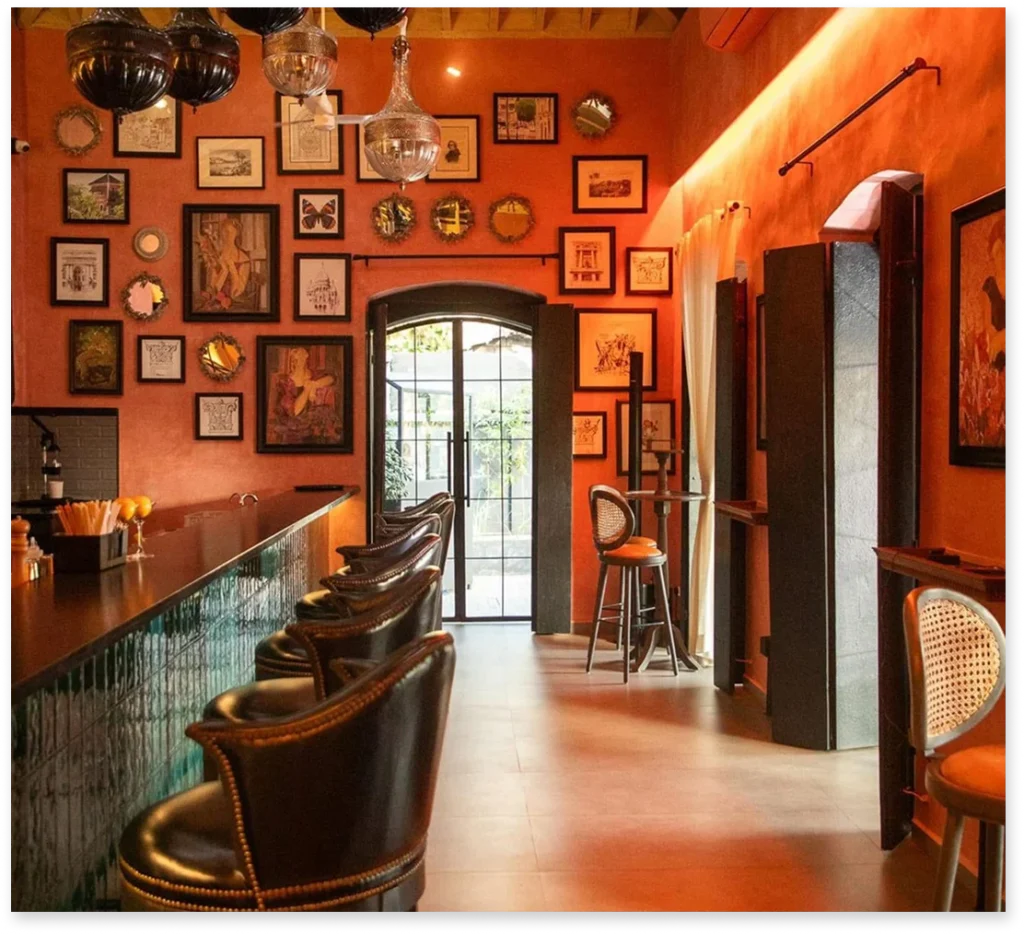
The narrative begins with the furniture, known historically as Móveis de Goa. These pieces are the ultimate expression of the "Indian soul, European silhouette" philosophy. Imagine a heavy Portuguese canapé or a grand cadeira (chair), but instead of the oak or pine found in Europe, it is rendered in the dark, lustrous depths of local rosewood or teak. The European form provides the structure, but the ornamentation is purely Indian; the carvings of vine leaves and acanthus are often interspersed with local flora and even the occasional mythical Indian creature. This is the hallmark of luxury interior design in Goa: a refusal to settle for the generic.
Colour was never a matter of mere decoration; it was a declaration of power.
In colonial Goa, the use of vibrant pigments—deep indigo, burnt ochre, and earthy terracotta—was a privilege. While commoners were often restricted to whitewash, the elite signaled their status through a bold palette. At Bottega Di Lusso, we take this historical cue and amplify it for the modern powerhouse. We move beyond the standard Azulejos (hand-painted tiles) to create bespoke stone flooring and wall patterns that serve as floor-to-ceiling artwork.
In our world, an interior is not "finished" until it feels like a curated gallery. We layer these spaces with handcrafted metalwork, bespoke glass, and commissioned art that speaks to Indian heritage while maintaining the sophisticated poise of a global citizen. For our clients, these opulent maximalist interiors are not just rooms; they are the physical manifestation of an exclusive legacy—one that values the artisan’s touch over the factory’s precision.
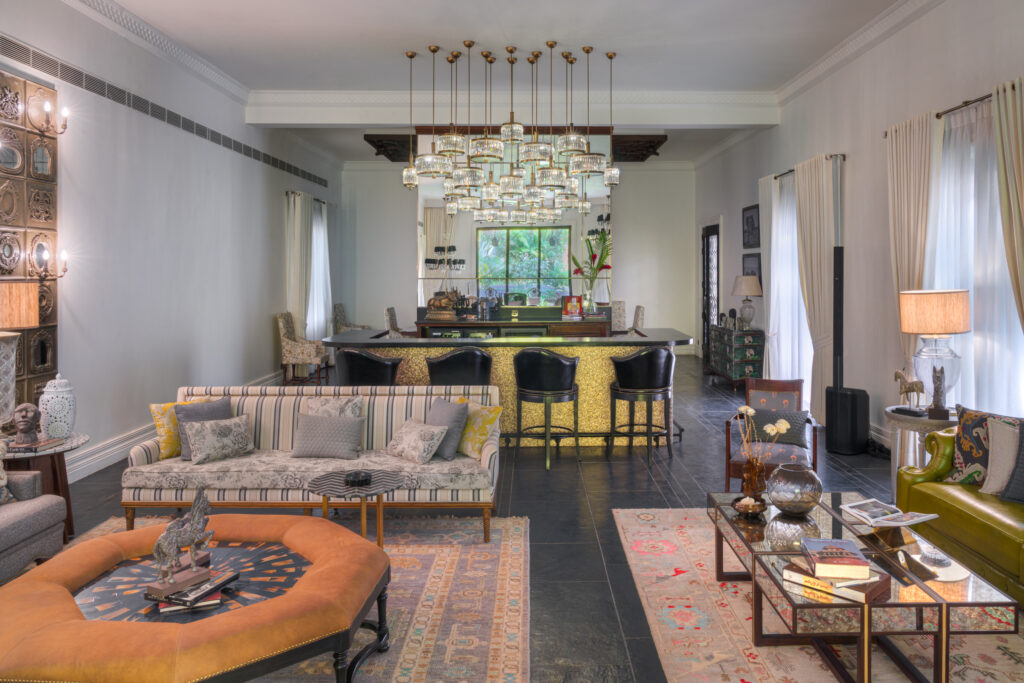
The Maximalist Manifestation: Craftsmanship & Symbolism
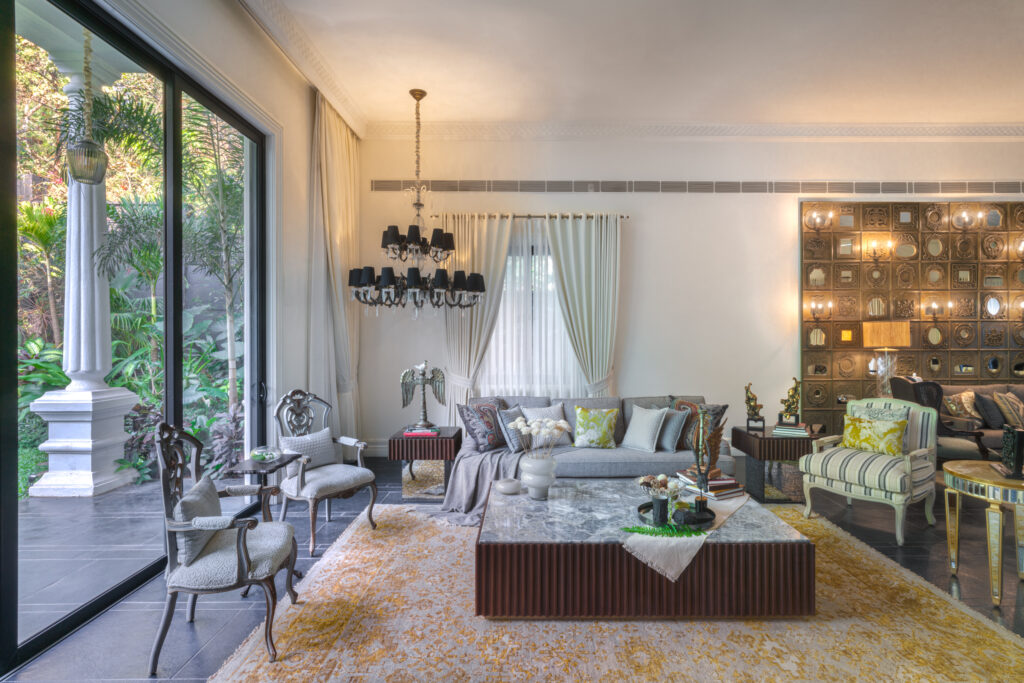
In the contemporary design landscape, there is a pervasive, almost timid, retreat into minimalism. A "sea of beige" has swept through luxury real estate, offering sterile spaces that lack a pulse. At Bottega Di Lusso, we view this as a missed opportunity. The Goan Colonial legacy was never about "less is more"; it was about the bold expression of identity. Our signature style—opulent maximalist interiors—is the antidote to the mundane.
To achieve this, we look beyond the catalog and into the workshop. For the powerhouses we represent—the industrialists and the celebrity interiors we craft—a home must be a one-of-a-kind masterpiece, akin to a commissioned work of art. We don’t just source; we create. This manifests in hand-made stone flooring where master artisans spent weeks inlaying patterns that tell a story underfoot, and in bespoke metal and glass work that transforms a foyer into a cathedral of light. Our chandeliers are not mere fixtures; they are hand-wrought sculptures that echo the grandeur of a Vacheron movement—complex, timeless, and impeccably engineered.
Furthermore, we believe that true luxury interior design in Goa must honor its roots through symbolism. We weave Indian heritage into the colonial framework, integrating motifs like the peacock, the lotus, and the sun into custom wood carvings and fabrics. This layering of history and contemporary practicalities creates a space that feels lived-in yet curated, ancient yet avant-garde. It is a design language spoken only by those who inhabit the most exclusive circles—a bold, unapologetic celebration of a life that is anything but ordinary.
The New Era of the Luxury Atelier
To inhabit a home designed in the Goan Colonial tradition is to step into a continuum of power and prestige. It is an architectural style that refuses to be ignored, much like the individuals who commission it. As we bridge the gap between 16th-century charm and 21st-century contemporary practicalities, the role of the luxury atelier becomes clear: we are the custodians of a lifestyle that transcends mere square footage.
At Bottega Di Lusso, founded by Nippy Sawhney and Priyanka Lulla, we understand that our clients—India’s leading industrialists, celebrities, and global CXOs—are not looking for "trends." They are looking for legacies. By marrying the bold, opulent maximalist interiors of Goa’s past with the bespoke craftsmanship of today, we offer entry into an incredibly exclusive circle. Whether it is through a custom-cast bronze chandelier or a floor of hand-laid stone, every element is a defiance of the "sea of beige" that defines the average.
In the world of luxury interior design in Goa, we do not merely build residences; we curate masterpieces for the collector’s soul. Choosing Bottega Di Lusso is an elective affinity for those who appreciate fine art, smooth jazz, and the weight of a well-told story. For the few who belong to this powerhouse circle, a home is the ultimate expression of victory—a bold, unapologetic, and beautifully curated sanctuary that stands as a testament to a life lived at the very peak.