

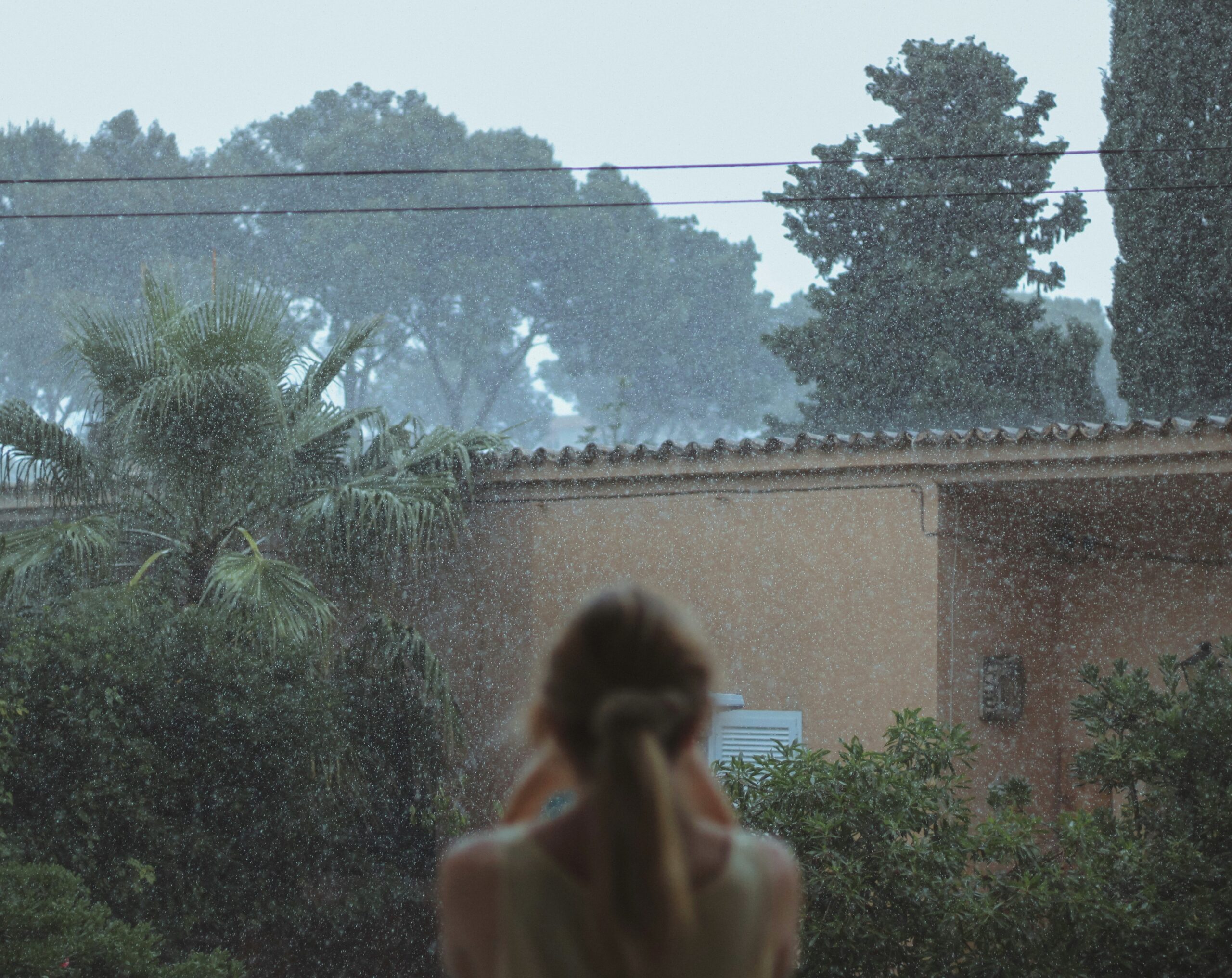
Across India, the arrival of the monsoon is nothing short of a cinematic transformation. In Goa, as heavy clouds roll in over the Arabian Sea, the land surrenders to nearly 3,000 millimeters of rainfall over four relentless months. The air grows dense with the perfume of drenched earth, ancient banyan trees blossom into intoxicating greens, and the sound of rain drumming against clay roof tiles creates a hypnotic rhythm that defines coastal living.
Yet, for those who steward high-end residential estates, this lush spectacle presents a complex architectural paradox.
The very elements that make Goa an idyllic sanctuary—its intense marine humidity, salty sea breezes, and tropical torrents—are the relentless adversaries of fine craftsmanship. High humidity levels, often soaring past 90 percent, can swell centuries-old teak joinery, cloud gilded brass finishes, discolor hand-woven silks, and encourage stubborn mold growth on natural wall coverings.
At Bottega Di Lusso, our design atelier approaches maximalism not merely as decor or opulence, but as a discipline of longevity. From our design studios in Delhi and Goa to our private residential projects across Dubai and India, we design homes that honor their environment without capitulating to it.
Below is an insider’s look into how our atelier prepares luxury estates in Goa for the monsoon, along with an actionable guide for homeowners across India seeking to protect their living spaces during the rains.
Architecture & Facade Shielding
The defense of a luxury home begins at its outermost boundary. In coastal architecture, the building's exterior must act as an intelligent filter rather than an impenetrable barrier. It must repel driving rainwater while allowing the structure to breathe.
Breathable Waterproofing: Laterite Stone & Lime Plaster
For centuries, Goa’s architecture has relied heavily on local red laterite stone and traditional lime plasters. Porous by nature, laterite functions like a natural sponge. When exposed to continuous monsoon rains, unsealed laterite absorbs moisture, transferring dampness through to interior paint coats and bespoke wall coverings.
A common mistake in the modern era is sealing these historic materials under thick coats of synthetic paints. While these paints create a temporary barrier, they trap internal moisture within the wall. When sun hits the structure between cloudbursts, this trapped water expands into vapor, causing paint to blister, peel, and crumble.
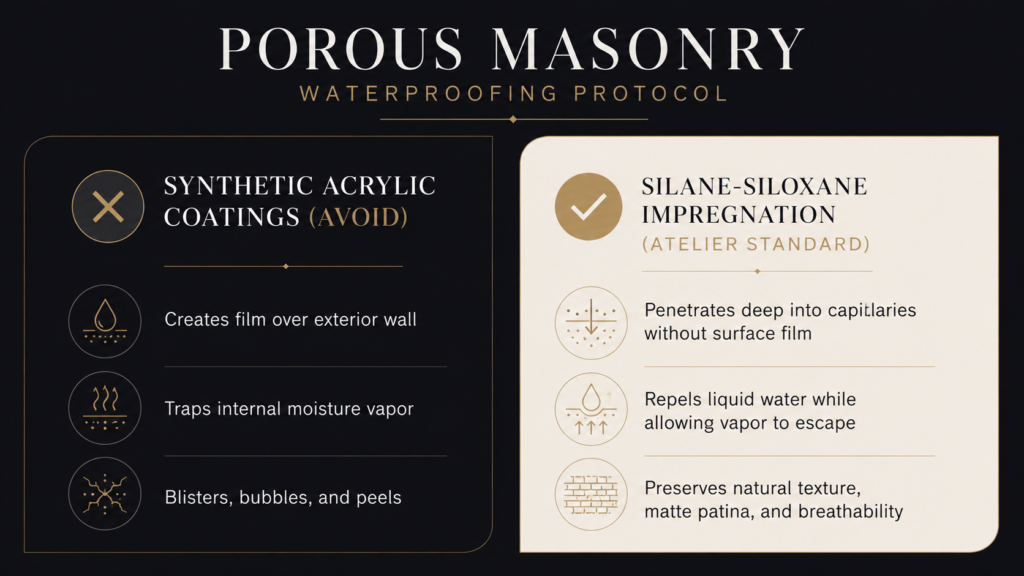
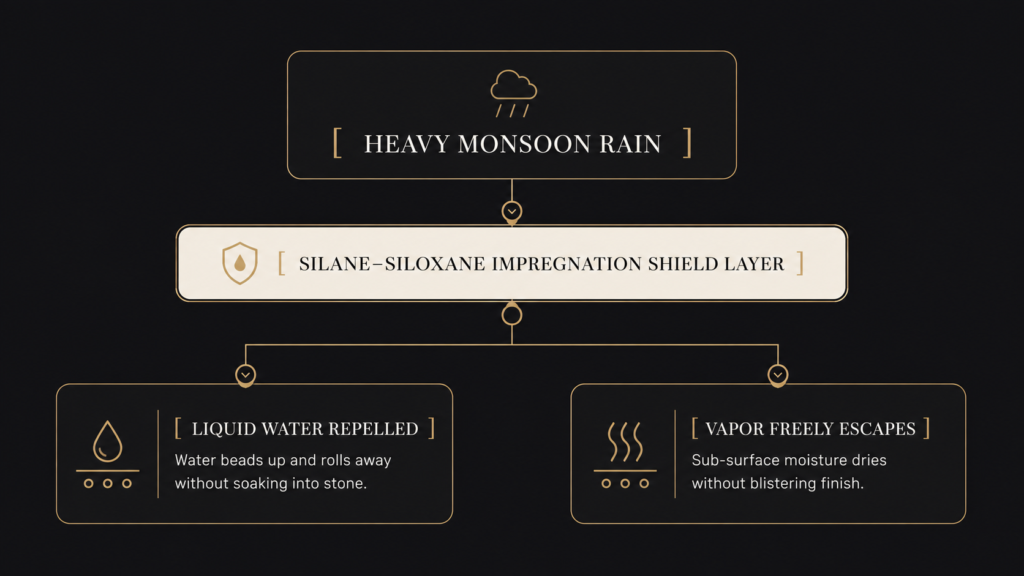
Our atelier utilizes deep-penetrating, breathable materials like silane-siloxane hydrophobic impregnators. These microscopic compounds bind chemically with the mineral capillaries of laterite and lime plaster. Rather than forming a surface film, they render the pores liquid-repellent while keeping them open to vapor diffusion. The result is an exterior facade that effortlessly sheds heavy rain while drying naturally from within.
Marine-Grade Fenestration & Hurricane Seals
High-velocity monsoon winds can push rain horizontally, forcing water through micro-gaps in standard window joinery. Water ingress around windows causes ruined flooring, damaged drapery, and interior masonry stains.
Pre-monsoon preparations for our estates involve rigorous audits of all fenestration systems:
- EPDM Synthetic Rubber Gaskets: Standard PVC seals degrade rapidly under intense tropical UV exposure during the summer, turning brittle and cracking when monsoon winds strike. We replace aged seals with marine-grade EPDM (ethylene propylene diene monomer) rubber gaskets that remain flexible across extreme temperature swings.
- Sub-Sill Drainage Matrix: Custom-engineered aluminum and treated teak window tracks feature concealed sub-sill drainage channels. These hidden weep-tracks clear collected rainwater outward, preventing water build-up during intense downpours.
- Multi-Point Pressure Locks: Large floor-to-ceiling glass sliding doors are equipped with multi-point perimeter compression latches that pull sash panels tightly against frame gaskets, creating an airtight, water-repellent seal against storm winds.
Exterior Metals: Brass, Bronze, and Wrought Iron Conservation
Coastal air is laden with microscopic sea-salt particles. When combined with monsoon humidity, salt acts as a powerful electrolyte, accelerating metal oxidation. Raw brass oxidizes into a dark green verdigris, copper tarnishes rapidly, and wrought iron gates develop structural rust.
To preserve custom architectural hardware, estate gates, and bronze garden sculptures, our conservation team uses a time-honored archival method:
- Chemical Cleansing: Metal surfaces are cleaned with non-ionic neutral surfactants to remove surface salt deposits, atmospheric pollutants, and grime.
- Micro-Crystalline Wax Sealing: After drying, surfaces are hand-treated with multiple thin layers of micro-crystalline wax (such as Renaissance Wax). Unlike standard paraffin or beeswaxes, micro-crystalline wax has an extremely fine molecular structure that resists moisture penetration, withstands high heat without melting, and leaves an invisible matte shield that won't obscure the metal's natural patina.
- Marine-Grade Polyurethane: For architectural brass exposed to direct sea spray, we apply a clear, UV-stabilized marine-grade polyurethane finish that locks out moisture and salt for multiple seasons.
Micro-Climate Engineering: Mastering Indoor Humidity & Airflow
Step inside a Bottega Di Lusso residence, and the atmospheric contrast is immediate. While the monsoon rages outside, the interior air remains crisp, light, and perfectly balanced. Controlling the indoor micro-climate is essential when curating homes filled with priceless art, delicate textiles, and custom woodwork.
Concealed Dehumidification & HVAC Protocols
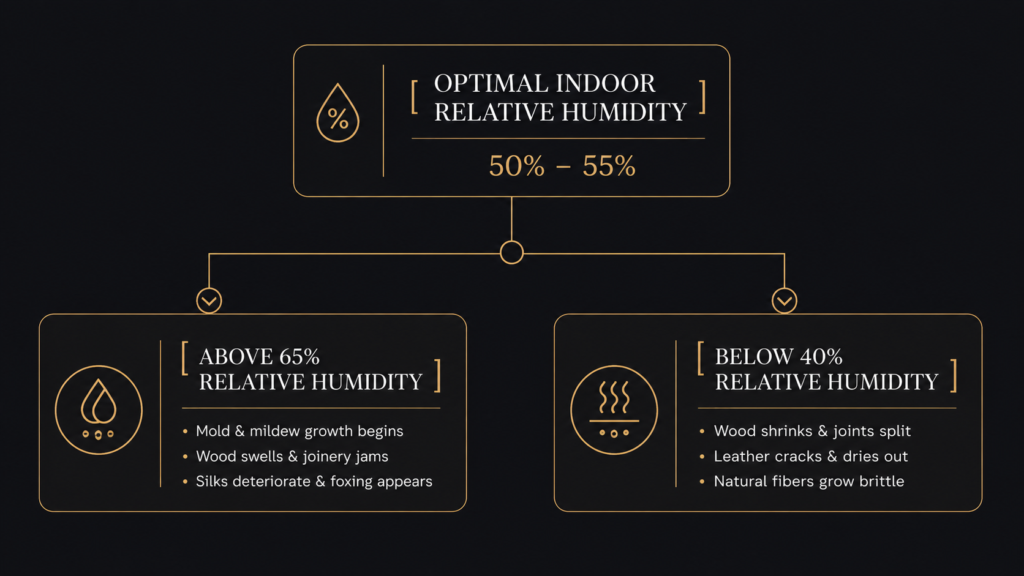
When relative humidity remains above 65% for more than 48 hours, dormant mold spores begin to multiply across porous surfaces like fabric, leather, wood, and wallpaper. Standard air conditioning units cool room air, but they are often inadequate for full moisture management during the humid monsoon months. When temperature settings drop too low, cold indoor surfaces can cause condensation to form on stone floors and walls.
Our estates feature integrated climate management systems that operate discreetly behind the scenes:
- Ducted Whole-Home Dehumidifiers: Installed out of sight within mechanical ceiling plenums, these specialized commercial-grade units pull excess moisture from the air without over-cooling interior spaces. They are set to maintain indoor relative humidity strictly between 50% and 55% year-round.
- Smart Humidity Sensor Arrays: Concealed sensors linked to home automation networks continuously track humidity across individual rooms. If a specific area—such as a primary dressing room, wine cellar, or art gallery—exceeds safe moisture thresholds, the system automatically runs dedicated dehumidification cycles.
- Low-Stage Off-Season Climate Management: For homeowners who travel during the monsoon months, our systems switch to an automated conservation mode. The HVAC system runs low-energy dry cycles for a few hours daily, keeping air moving and preventing moisture accumulation while minimizing power usage.
Protecting Commissioned Art & Frescoes from Foxing
High coastal humidity poses a quiet threat to fine art collections. Paper works, oil canvases, and hand-painted wall frescoes absorb atmospheric moisture. This environment encourages the growth of microscopic fungi that create rust-colored brown spots known as foxing, while causing canvas fibers to stretch, sag, and detach from wooden stretchers.
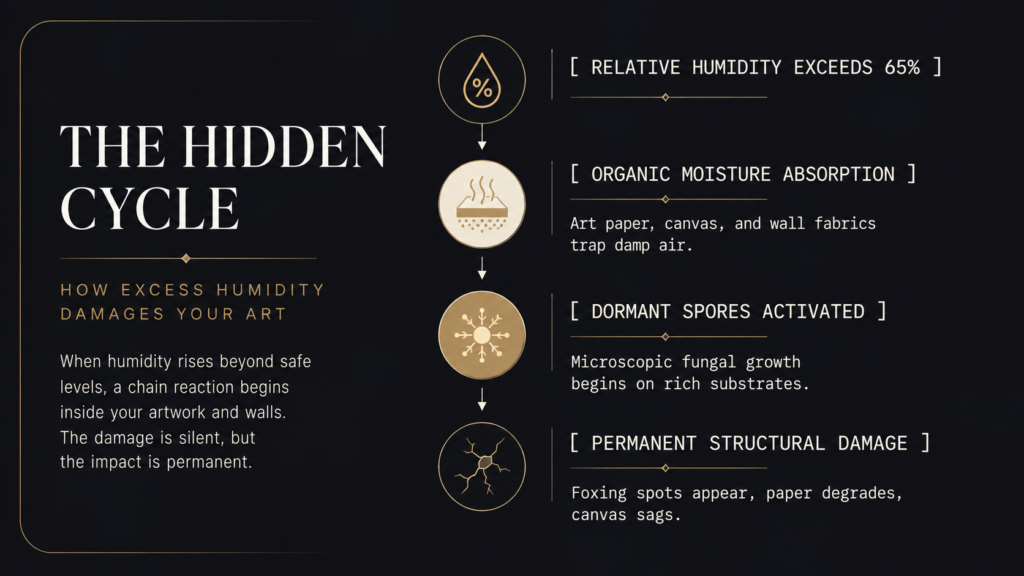
To protect valuable art collections in our coastal estates, we follow archival museum protocols:
- Back-Ventilated Framing: Framed artworks are hung with small, invisible acrylic bumpers behind the frame corners. This creates an open 1/2-inch air gap between the frame and the wall, encouraging air movement and preventing dampness from transferring off the masonry onto the art paper.
- Conservation Barrier Mounting: Fine art on paper is mounted using acid-free, 100% rag mat boards paired with moisture-barrier backing materials. Sealed, UV-filtering conservation glass protects works from direct humidity fluctuations.
- Anti-Fungal Sub-Surface Prep: Before applying hand-painted murals, silk wallpapers, or frescoes to interior walls, our teams apply specialized anti-fungal primers and moisture-resistant vapor barriers behind the decorative finish.
Storing Fine Silk, Velvet, and Hand-Knotted Carpets
Maximalist interiors thrive on rich textural layering: plush cut-velvet upholstery, hand-embroidered silk drapery, and vintage Persian or Kashmir carpets. However, natural protein fibers like silk and wool are highly absorbent, making them prone to damp smells and mildew during long periods of high humidity.
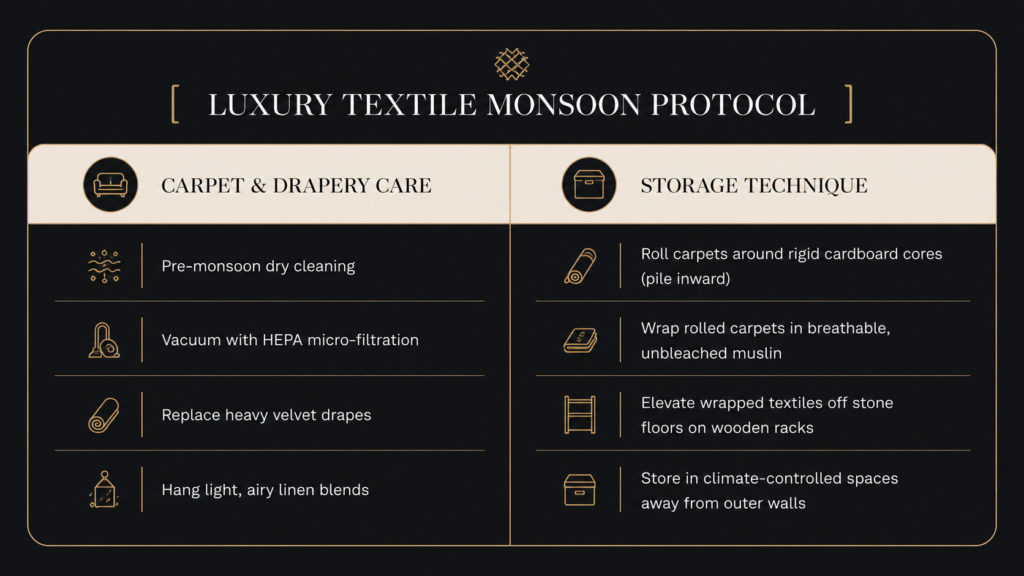
Prior to the arrival of the monsoon, our estate curation team carries out a series of protective fabric care protocols:
- Deep Extraction Cleansing: All fine carpets and heavy upholstery undergo professional dry extraction cleaning to remove micro-dust, organic debris, and latent spores that mold feeds on.
- Elevated Muslin Storage: Rare wool and silk carpets are rolled around rigid cardboard cores—never folded—with their pile facing inward. They are wrapped in unbleached, breathable muslin fabric rather than non-breathable plastic sheets, which can trap ambient moisture inside. Wrapped carpets are stored horizontally on elevated wooden racks inside climate-controlled storage areas.
- Seasonal Textile Rotation: Heavy velvet window drapes are often taken down for the season and replaced with lighter, airy linen-cotton blends. This subtle change softens the room's atmosphere during overcast monsoon days while allowing air to circulate freely around window openings.
Preserving Maximalist Materials: Hardwoods, Metals, and Upholstery
The hallmark of Bottega Di Lusso’s aesthetic is "Indian-Flavoured Maximalism"—a rich blend of antique architectural woodwork, inlaid marble, hand-cast brass elements, and rich decorative finishes. Keeping these diverse materials looking their best in coastal weather requires careful attention to material science.
Teak, Rosewood, and Antique Joinery Expansion Management
Natural wood is a hydroscopic material: it continuously absorbs and releases moisture to stay in equilibrium with the surrounding air. When relative humidity spikes during the monsoon, wooden furniture absorbs water vapor, swelling across its grain. This natural movement can lead to sticking cabinet doors, warped dining tables, split wood panels, and cracked lacquer finishes.
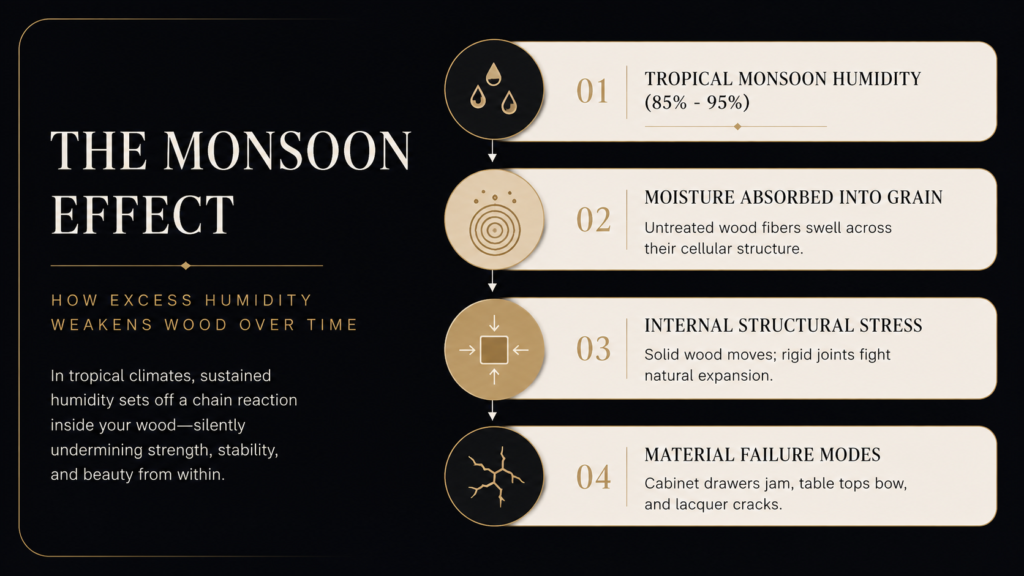
To prevent wood damage while preserving the beauty of antique furniture, our craftsmen rely on traditional joinery techniques combined with protective finishes:
- Floating Panel Construction: Custom millwork and solid wood doors are built with floating panel joinery. This gives wood panels room to expand and contract naturally within frame grooves without warping the surrounding frame.
- Balanced Underside Sealing: A common oversight in furniture care is finishing only the visible top surface of a wooden table or console, leaving the underside raw. In humid weather, the unsealed underside absorbs moisture faster than the finished top, causing the wood to cup and warp. We apply moisture-barrier sealers to every side, edge, and hidden face of our custom joinery.
- Hydrophobic Natural Wax Polishing: Antique teak, rosewood, and walnut pieces are polished with custom blends of beeswax, carnauba wax, and essential oils. This mixture penetrates the wood grain, nourishing the timber while creating a water-repellent layer that reduces atmospheric moisture absorption.
Micro-Crystalline Waxing for Aged Brass and Gilding
Opulent maximalist interiors often feature warm metallic accents: hand-chased brass hardware, unlacquered bronze fixtures, and gold-leaf details. In humid coastal air, these fine metal surfaces can oxidize, lose their luster, or develop unsightly water spots.
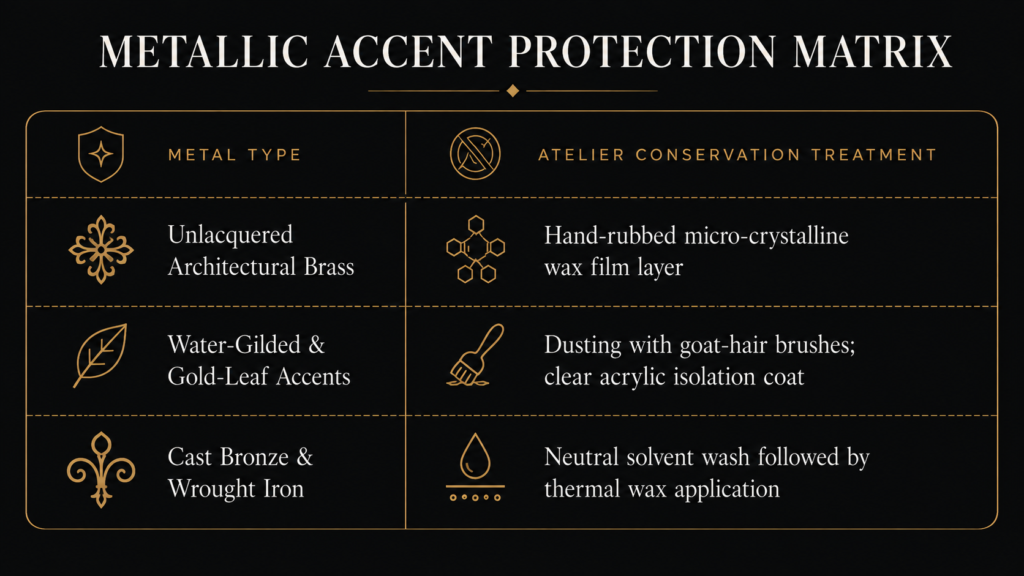
Rather than using harsh chemical polishes that strip away age-earned patinas, our conservation team uses gentler restoration techniques:
- Gentle Surface Cleansing: Brass and bronze surfaces are wiped clean using mineral spirits or non-ionic cleansers to remove dirt and surface oils.
- Protective Wax Buffing: A thin coat of micro-crystalline wax is applied with soft flannel cloths, left to cure, and buffed by hand to a satin luster. This clear, non-greasy coat seals out air and moisture, keeping brass elements bright and tarnish-free throughout the monsoon season.
- Gilding Isolation: For delicate gold-leaf frames and gilded accents, we apply a clear, water-resistant isolation layer. This keeps moisture from reaching the organic gesso ground beneath the gold leaf, preventing cracking and flaking.
From Atelier to Every Home: 10 Essential Monsoon Rules for Indian Homeowners
While our design atelier manages large coastal estates with specialized systems, the principles of monsoon care apply to any home. Whether you live in a coastal apartment in Mumbai, a heritage bungalow in Kerala, or a residence in Delhi facing humid rains, these ten steps will help protect your living space during the wet months:
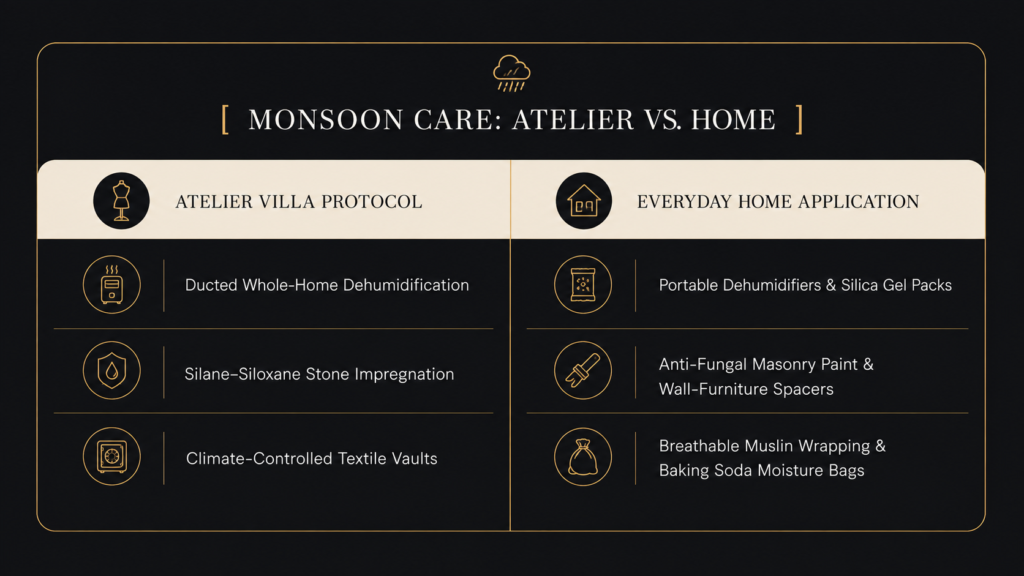
1. Move Furniture Away from Exterior Walls: The 2-Inch Air Circulation Rule.
Maintain a gap of at least 2 to 4 inches between wooden wardrobes, sofas, and headboards and any exterior-facing wall. Masonry walls absorb moisture from driving outdoor rain; direct contact transfers dampness to wood and upholstery, creating an ideal environment for mold growth.
2. Store Natural Fiber & Wool Rugs Safely: Prevent Floor Dampness from Trapping Moisture.
Roll up fine wool, silk, or jute rugs during the monsoon. Never leave them flat on stone or tile floors where moisture can seep through floor joints. Roll rugs around rigid tubes with their pile facing inward, wrap them in breathable cotton or muslin fabric, and store them off the floor in a dry room. Avoid plastic packaging, which traps humidity inside.
3. Place Silica Gel & Charcoal in Closed Storage: Passive Moisture Control for Wardrobes.
Place 100g to 250g pouches of activated charcoal or heavy-duty silica gel inside closed wardrobes, shoe cabinets, and storage units. Activated charcoal absorbs excess moisture and neutralizes damp odors. On drier days, open wardrobe doors for 15 minutes to let fresh air circulate.
4. Inspect and Clean Window Drainage Channels: Clear Weep Holes to Prevent Water Ingress.
Check the rubber seals along sliding aluminum and UPVC window frames. Replace brittle or cracked gaskets that could let rainwater seep inside during heavy winds. Clear out small dirt debris from the bottom track weep holes using a stiff wire brush to keep water draining smoothly outward.
5. Switch to Microfiber Damp-Wiping: Avoid Excess Water on Hard Flooring.
Avoid wet mopping wooden, laminate, or natural stone floors during the monsoon season. Excess water can slip into floor joints, causing wood planks to swell and cup. Use a tightly wrung, damp microfiber cloth paired with a pH-neutral cleaner to keep surfaces clean without adding unwanted moisture.
6. Clear Drains, Roof Gutters, and Trim Tree Branches: Prevent Standing Water Before Heavy Rains.
Prune overhanging tree branches near roofs, glass skylights, or electrical lines before the heavy rains start. Clean out roof gutters, terrace drains, and rainwater pipes twice a month to prevent dry leaves and debris from causing water backup into interior ceilings.
7. Protect Outdoor Metals with Carnauba Wax or Petroleum Jelly: Inhibit Salt Air and Moisture Corrosion.
Wipe down brass door handles, metal balcony railings, and outdoor iron furniture with a dry cloth, then apply a light layer of carnauba furniture wax or white petroleum jelly. This transparent layer repels rainwater, prevents rust, and keeps metals looking bright.
8. Clean Hard Surfaces with Anti-Fungal Solutions: Natural Mold Prevention without Harsh Fumes.
Clean bathroom tiles, kitchen backsplashes, and laminate surfaces using a mixture of equal parts white vinegar and distilled water. Vinegar kills surface mold spores naturally without off-gassing harsh fumes or damaging delicate sealants.
9. Run Air Conditioners on 'Dry Mode': Lower Humidity Without Over-Cooling.
If you don't have a standalone dehumidifier, run your air conditioner on "Dry Mode" for 1 to 2 hours every day. This setting extracts excess water vapor from room air without dropping temperatures too low, helping keep indoor relative humidity at comfortable, safe levels.
10. Install Surge Protection for Home Electronics: Protect High-End AV and Smart Systems.
Monsoon lightning storms can send high-voltage surges through local power lines, threatening sensitive home automation systems, audio components, and smart televisions. Use high-capacity surge protectors or dedicated online UPS systems, and fit outdoor electrical outlets with IP65-rated weatherproof cover boxes.
The Bottega Di Lusso Legacy Care Service
At Bottega Di Lusso, we view great interior design as an ongoing commitment to stewardship. True luxury goes beyond initial curation; it means ensuring that a home retains its beauty, comfort, and character across every season.
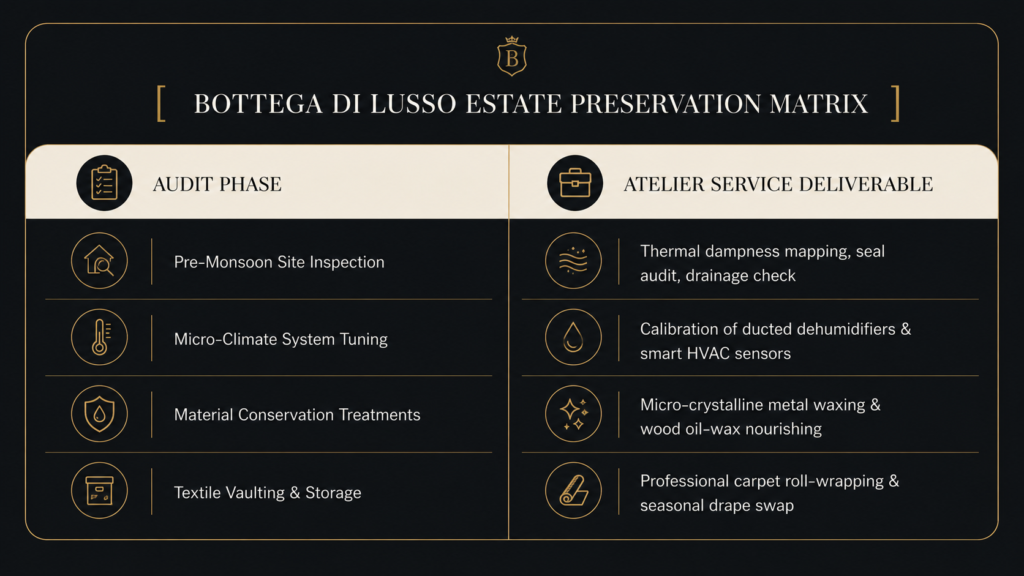
Our studio offers tailored seasonal maintenance services for luxury estate clients across Goa, Delhi, and Dubai:
- Pre-Monsoon Estate Audits: Comprehensive inspections of exterior facades, window joinery, sub-surface drainage, and roof structures to catch potential moisture issues before the rains start.
- Micro-Climate Fine-Tuning: Professional calibration of integrated dehumidification systems, smart humidity sensors, and HVAC networks to keep interior moisture levels balanced automatically.
- Material Conservation Services: On-site care for bespoke furniture, metallic finishes, fine art framing, and natural stonework carried out by experienced master craftsmen.
- Textile Vaulting & Rotation: Professional cleaning, breathable wrapping, and secure off-season storage for delicate silk rugs, drapery, and rich accent textiles.
Through careful design, material selection, and preventive maintenance, a luxury home can face the tropical monsoon effortlessly—standing as an inviting sanctuary of beauty and comfort, no matter the weather outside.
Frequently Asked Questions
We use a two-part approach: continuous indoor climate management and protective fabric care. Concealed dehumidifiers keep interior relative humidity between 50% and 55%, preventing mold growth. Delicate fabrics are treated with breathable hydrophobic coatings, kept in well-ventilated furniture layouts, and stored in unbleached cotton or muslin covers during peak monsoon months.
Avoid wet mopping wooden floors; instead, use a tightly wrung microfiber cloth damp with a pH-neutral cleaner. Apply water-resistant wood polishes or micro-crystalline waxes before the monsoon season to seal wood pores. Keep solid wood furniture 2 to 4 inches away from exterior walls to maintain continuous air circulation.
Natural laterite stone should be treated with breathable silane-siloxane hydrophobic impregnating sealers rather than thick acrylic paints. These clear sealers penetrate the stone's capillaries to repel liquid rain while allowing trapped internal water vapor to dry out naturally.
Leaving a coastal villa closed and unventilated for months can lead to mold growth, swollen joinery, and metal tarnish. It's best to install automated climate systems that run regular dehumidification cycles, or work with a professional estate care service to perform weekly site visits and air circulation checks.
Interior relative humidity should be kept between 50% and 55%. Humidity levels above 65% encourage mold growth and wood expansion, while levels below 40% can cause natural woods and fine leathers to dry out and crack.