

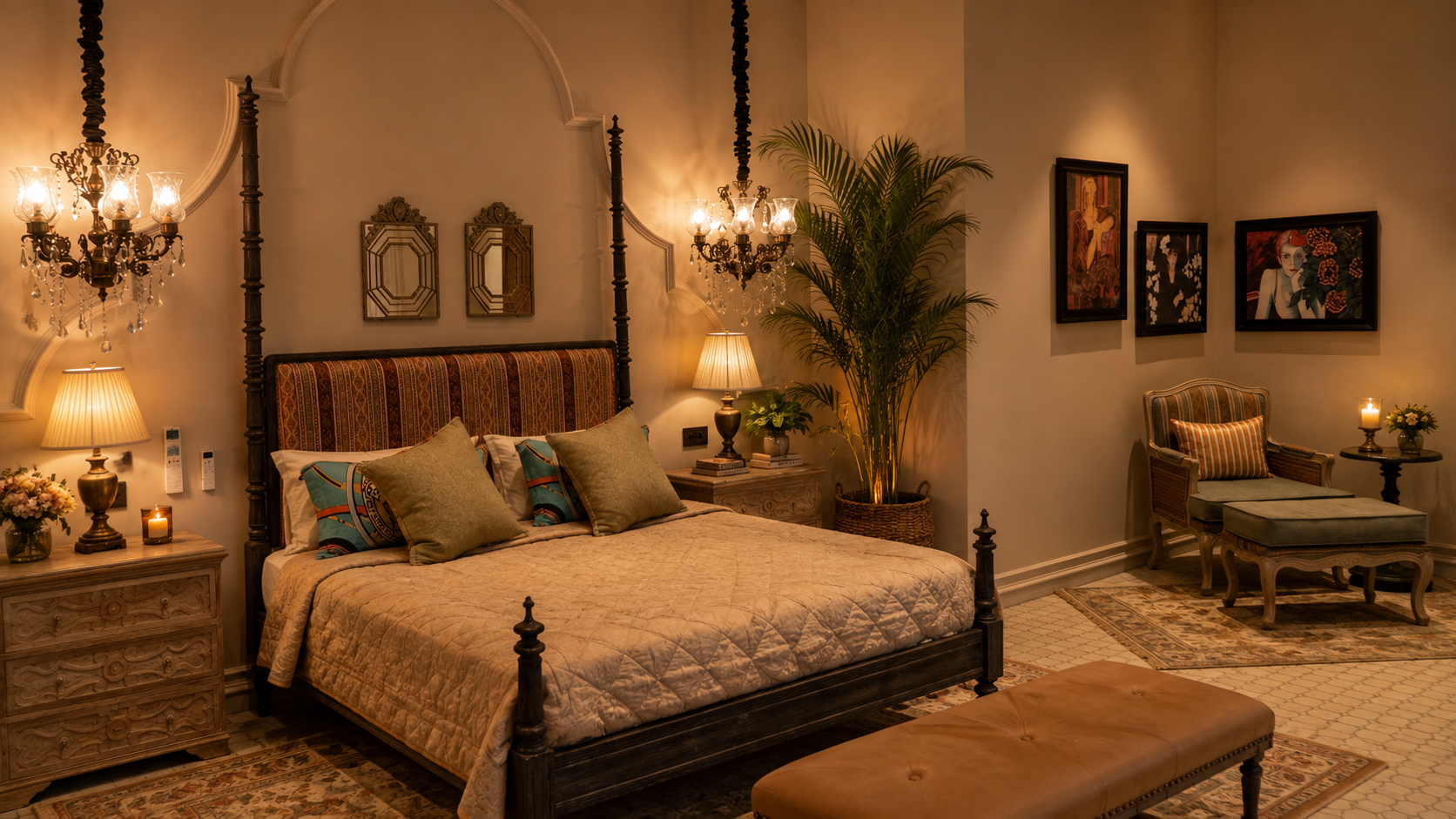
Indian maximalism is emerging as a distinctive language for contemporary luxury interiors: one that brings together India's craftsmanship, expressive materials, layered colour, architectural detail, and personal collections with the precision of modern design. It is not a return to traditional Indian interiors, nor is it simply an accumulation of ornament.
Instead, it represents a more personal and culturally rooted interpretation of luxury. One increasingly visible direction in contemporary Indian residential design is a shift in how high-end spaces are conceived across the subcontinent—moving away from a reliance on generic international minimalism toward an aesthetic grounded in cultural identity, narrative, and material depth.
What does Indian luxury look like when it stops trying to look international?
For years, high-end residential interiors across India often drew heavily on international design vocabularies: polished imported marble, neutral European upholstery, minimalist metal accents, and catalogue furniture sourced from global design capitals. While these spaces communicated refined expense, they sometimes lacked a distinct sense of place or personal narrative. An emerging direction in luxury interior design in India sees a growing preference for spaces that are more culturally specific, material-rich, personal, and architecturally expressive.
What Is Indian Maximalism?
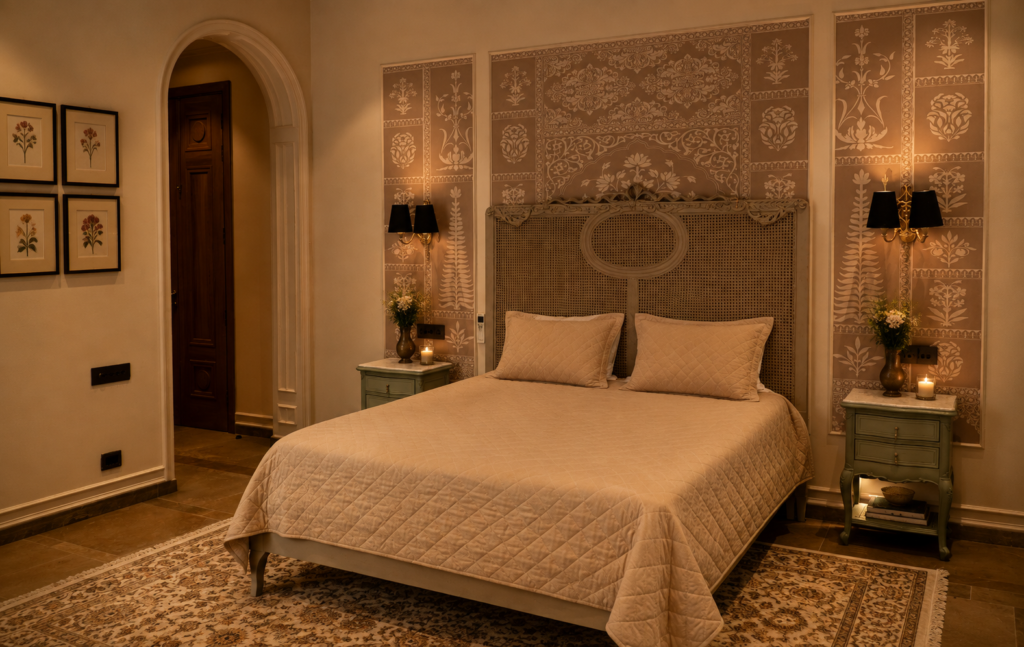
Indian maximalism is a design philosophy that marries structural contemporary architecture with the richness of Indian artisanal traditions, expressive materiality, and personal narrative. It is an approach where spatial drama is created through the deliberate layering of texture, craft, art, and architectural elements.
However, maximalism is not defined merely by the presence of more items within a room. True Indian maximalism balances richness with architectural rigor. It combines:
- Contemporary architectural frameworks and spatial clarity
- Traditional Indian craftsmanship integrated directly into structural elements
- Expressive material pairings (such as raw timber alongside burnished brass)
- Layered color palettes derived from regional mineral and textile traditions
- Curated art, antiques, and personal heirlooms
- Bespoke, commissioned furniture and site-specific stonework
Crucially, these expressive elements are governed by classic design discipline: proportion, editing, restraint, spatial hierarchy, and contemporary functionality. The richness comes from how these elements interact with one another, rather than their sheer quantity. In our residential work across Goa and Delhi, we have found that maximalism succeeds when it is treated not as surface decoration, but as spatial choreography.
| Luxury | From status to identity |
| Decoration | From ornament to narrative |
| Materials | From expensive to meaningful |
| Objects | From possessions to collections |
| Craft | From accent to architecture |
| Maximalism | From excess to curation |
Maximalism Is Not Clutter
A common misconception is that maximalism equates to visual noise. The distinction lies in visual organization:
- Clutter is the unstructured accumulation of objects without clear hierarchy or spatial balance. It overwhelms the viewer because the eye finds no resting place.
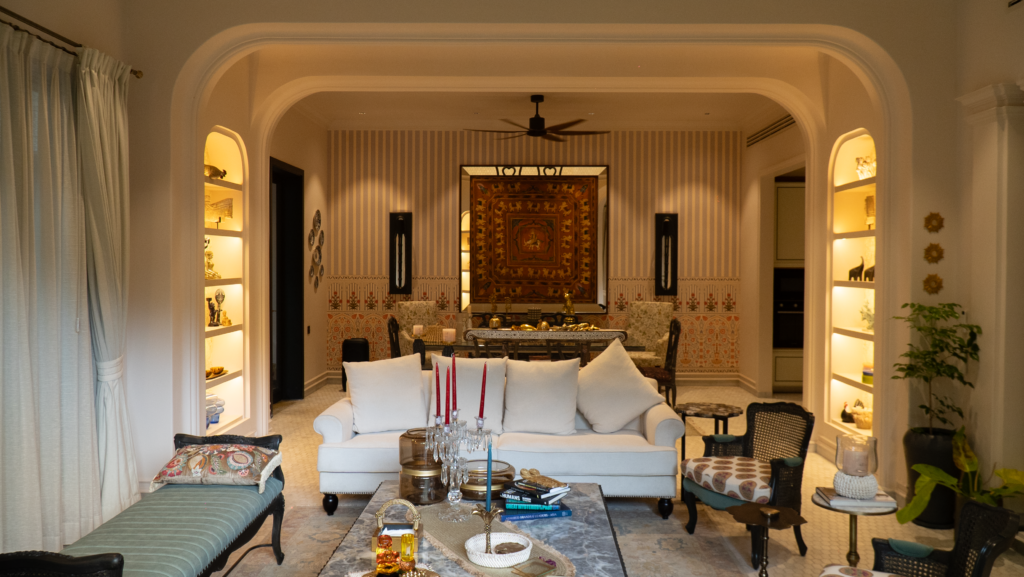
- Maximalism is controlled abundance governed by hierarchy, rhythm, contrast, scale, and negative space.
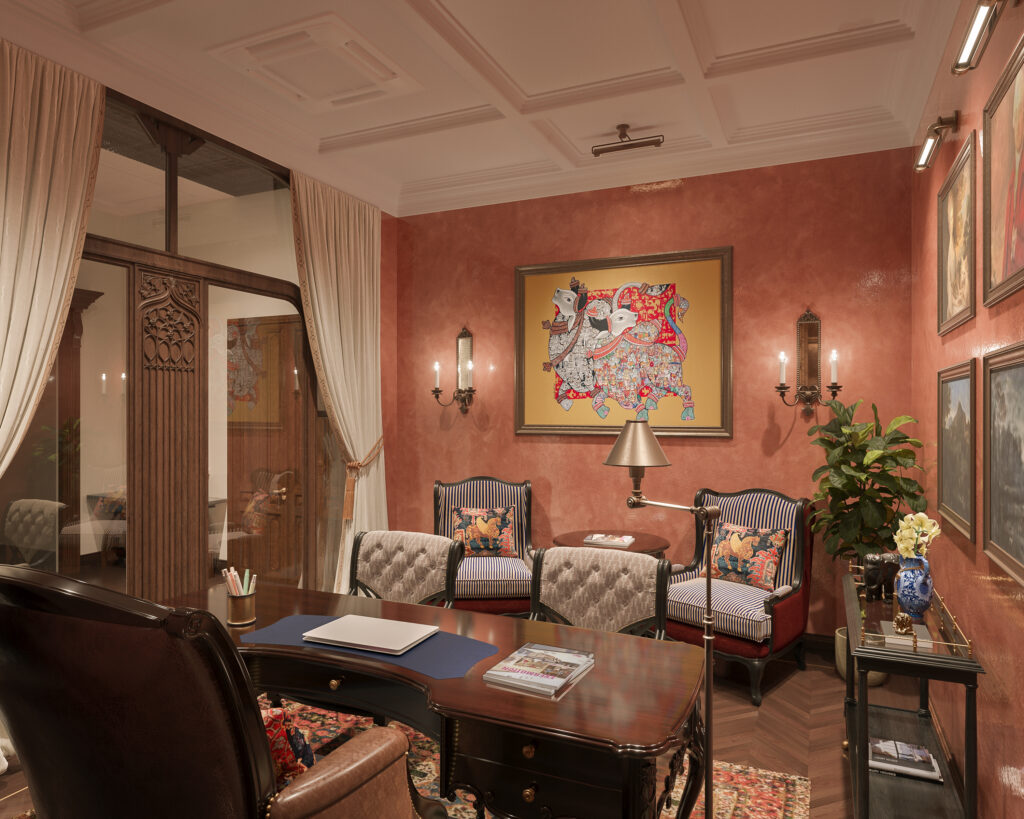
In a well-executed maximalist room, strong focal points—such as a large-scale contemporary painting or a carved stone partition—anchor the eye. Surrounding textures, objects, and colors act as supporting elements. Negative space is protected around complex objects, allowing every crafted detail room to breathe.
Maximalism Is Not Traditionalism
Indian maximalism must not be confused with historical reproduction or period-style decoration. Traditional Indian interior design possesses its own rich history, but contemporary maximalism does not aim to recreate a 19th-century haveli or a royal palace interior.
Instead, it is a contemporary reinterpretation of heritage. It places artisanal techniques within modern architectural envelopes. Examples include set stone jalis (latticework) framed within exposed concrete walls, traditional brass inlay embedded into matte lime plaster, or antique Indian bronzes displayed against minimalist steel and glass partitions. The productive tension between historical craft and contemporary architectural framing creates the vitality of the style.
Why Indian Luxury Is Finding Its Own Design Language
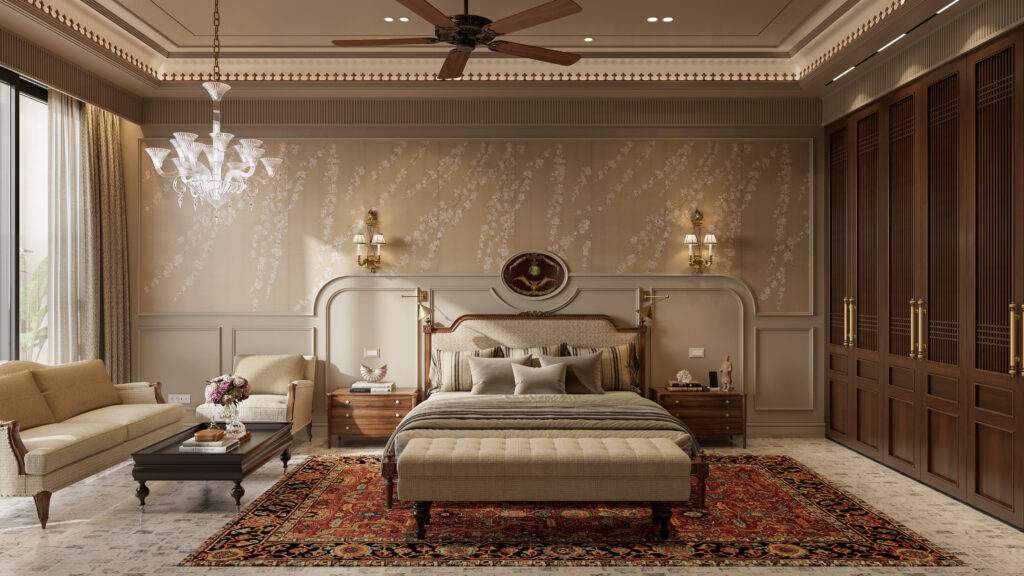
Recent coverage across Indian design publications points toward a subtle shift in client priorities. Five evolving perspectives explain why this design language is gaining momentum:
- Cultural Confidence: Design coverage increasingly reflects a desire among homeowners to showcase regional art, architectural forms, and heritage techniques within modern homes, rather than replicating international templates.
- Renewed Interest in Craftsmanship: Indian design studios are collaborating more directly with master artisans, moving beyond decorative handicrafts toward architectural-grade masonry, wood carving, and metalwork.
- Personalisation Over Standardisation: Uniform luxury finishes are increasingly set aside in favor of tailored environments reflective of individual histories, travel collections, and personal habits.
- Appreciation for Materiality: Designers report an increasing preference for natural materials that acquire character over time—such as hand-honed stone, patinated bronze, solid teak, and hand-loomed silk.
- The Rise of the Collected Home: Homes are increasingly designed around curated objects accumulated over a lifetime, where interiors serve as frameworks for personal art collections, books, heirlooms, and commissioned design pieces.
The Seven Manifestations of Indian Maximalism
To understand how Indian maximalism translates into physical space, we can examine seven core manifestations.
- Craft as Architecture
- Material Maximalism
- Colour as Identity
- The Collected Interior
- Architecture First
- Light, Shadow & Atmosphere
- Bespoke Expression
01 — Craft as Architecture
Traditional Indian craftsmanship is moving beyond standalone decorative accessories and becoming integrated directly into structural and architectural envelopes.
Rather than placing a carved wooden screen as a decorative room divider, modern interiors incorporate hand-carved teak joists directly into ceiling structures, embed hand-carved stone blocks into load-bearing walls, or cast bespoke terrazzo floors inlaid with brass geometric patterns. Other architectural craft applications include hand-troweled lime plaster (araish or tadelakt), carved wooden entrance portals, and custom metalwork doors. One recurring observation in our studio projects is that when craft is integrated structurally rather than applied as a surface layer, it gives the home an enduring architectural gravity.
Case Study: Delhi Residence
Design Challenge: Define distinct zone transitions within an open-plan living room without blocking natural light.
Craft Response: A floor-to-ceiling geometric jali screen hand-carved from white Rajasthan sandstone, framed in dark structural steel.
Outcome: The partition functions as a structural divider, an architectural light filter, and a primary focal point.
02 — Material Maximalism
In Indian maximalism, richness is achieved through material relationships and tactile contrasts rather than high cost alone.
Instead of using a single marble across floors, walls, and countertops, this approach relies on juxtaposing opposing textures:
- Polished, heavily veined marble set against hand-planed raw timber
- Aged, patinated brass bordering unrefined lime plaster
- Hand-woven silk and wool textiles laid over polished terrazzo
- Fluted dark wood cabinetry paired with sculpted soapstone surfaces
The interplay between smooth and rough, reflective and matte, heavy and light creates sensory depth. Specificity of material selection communicates quality.
Case Study: Goa Villa
Design Challenge: Ground a double-height contemporary living area with warmth and regional context.
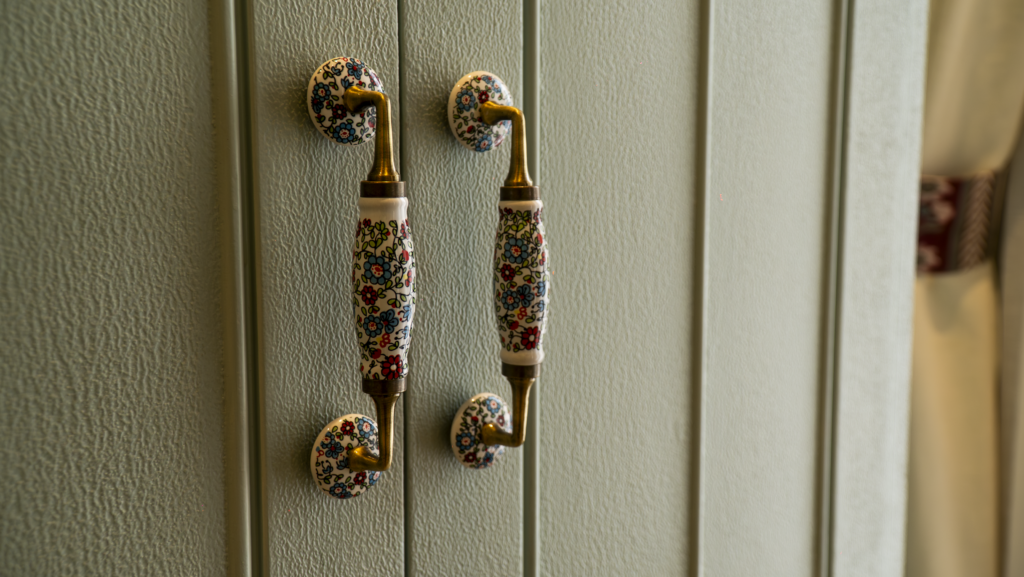
Material Response: Rough-cut local laterite stone walls paired with hand-honed Kadappa stone flooring, warm teak millwork, and hand-burnished brass door hardware.
Outcome: A tactile, balanced space that connects interior living with the surrounding coastal environment.
03 — Colour as Cultural Identity
Colour in Indian maximalism goes far beyond temporary paint trends. It reflects regional landscapes, mineral pigments, and historic textile traditions.
Commonly integrated hues include:
- Mineral indigo and deep lapis blue
- Terracotta, warm ochre, and brick red
- Turmeric yellow and saffron
- Forest green, moss, and emerald
- Vermilion, deep garnet, and muted ivory
Indian maximalism does not always require a saturated or bright palette. A muted interior featuring charcoal stone, raw timber, aged bronze, and off-white lime plaster can still embody an Indian aesthetic through architectural proportion, texture, and light manipulation. When strong colour is introduced, it is typically applied with architectural intent—defining an entire room, highlighting a vaulted ceiling, or framing a central threshold.
04 — The Collected Interior
The residential home is shifting away from showroom-style furniture suites toward curated spaces built over time. In our client consultations, we often advise building around two or three hero pieces per room rather than attempting to display entire collections simultaneously.
A collected interior brings together diverse elements:
- Antique Indian bronzes and colonial-era teak furniture
- Contemporary South Asian art and modernist sculpture
- Travel artifacts, vintage textiles, and rare books
- Custom contemporary furniture commissioned specifically for the space
The key to preventing a collected home from appearing chaotic is spatial hierarchy. Related objects are grouped together in clear clusters, display joinery is designed with dedicated proportions, and visual breathing room is maintained around hero art pieces.
05 — Architecture as Maximalism
Maximalism can begin with architectural form before a single piece of furniture or artwork enters the home.
Classical Indian architectural concepts—such as central courtyards (angan), shaded verandas, vaulted ceilings, series of arched colonnades, and deep thresholds—create spatial drama. In modern luxury residences, these features are reinterpreted with clean lines and contemporary engineering.
A double-height central courtyard featuring open skies, framed view corridors, and sculptural staircases provides spatial complexity. The architecture itself delivers narrative, reducing the need for applied surface ornamentation.
06 — Light, Shadow & Atmosphere
Indian architecture has historically maintained a close relationship with daylight, shade, enclosure, and thermal comfort. Contemporary maximalist design uses modern lighting technology to highlight these natural atmospheric qualities.
Key lighting strategies include:
- Filtered Daylight: Using stone or timber jalis to project patterned shadow art across floors and walls as the sun moves.
- Concealed Architectural Lighting: Integrating LED channels behind plaster cornices, inside wall niches, and under floating stone steps to emphasize texture.
- Focused Art and Accent Lighting: Highlighting sculptural objects, textiles, and wall surfaces while keeping general ambient light soft.
- Feature Luminaires: Incorporating large-scale brass, blown glass, or hand-hammered metal light fixtures as central sculptural statements.
Controlling the balance between light and shadow gives depth to layered materials and rich color palettes.
07 — Bespoke as the Ultimate Expression of Luxury
A compelling expression of residential luxury is not simply acquiring rare items, but commissioning unique pieces tailored specifically to the residence.
Personalized elements include:
- Custom-designed furniture crafted from selected hardwood timber
- Site-specific stone carving, marble inlay, or metalwork partitions
- Hand-loomed silk and wool rugs sized to exact room proportions
- Custom architectural millwork, doors, and concealed storage systems
Bespoke design ensures that every piece responds directly to the home's scale, light, and functional requirements, creating a cohesive visual environment.
What Indian Maximalism Is Not
To clarify the core principles of Indian maximalism, it helps to contrast its defining attributes with common misconceptions:
| Not Indian Maximalism | Indian Maximalism |
|---|---|
| Accumulation — Buying objects for display | Curation — Selecting objects with narrative purpose |
| Clutter — Unstructured placement of items | Layering — Thoughtful depth with visual hierarchy |
| Ornament everywhere — Unfiltered decoration | Strategic ornament — Focused focal points |
| Historical reproduction — Copying past eras | Contemporary reinterpretation — Traditional craft in modern forms |
| Expensive materials — Cost-driven choices | Meaningful materiality — Texture- and context-driven selections |
| Generic luxury — Standardized international styling | Cultural specificity — Rooted in place and heritage |
| Catalogue furniture — Mass-produced sets | Collected & commissioned pieces — One-of-a-kind designs |
| Visual noise — Overwhelming sightlines | Visual rhythm — Balanced movement across spaces |
How to Create Indian Maximalism Without Creating Clutter
Applying a maximalist approach while maintaining spatial elegance requires clear guidelines. Consider these eight practical principles:
- Start with the Architecture: Establish strong spatial proportions, ceiling details, and framed view corridors before selecting furniture.
- Choose a Material Hierarchy: Select one primary material (such as dark teak or limestone) to dominate, supported by two or three contrasting accent materials (such as brass, fluted glass, or lime plaster).
- Establish a Coherent Colour Story: Base the color palette on three to four complementary tones derived from natural pigments or materials.
- Mix Old and New: Pair antique art or vintage furniture with contemporary silhouettes to prevent the space from feeling like a museum display.
- Create Clear Focal Points: Limit primary focal points to one or two per room—such as a large art piece or a custom headboard wall.
- Edit Aggressively: Review every surface during styling. If an object does not contribute to the overall visual rhythm, remove it.
- Protect Negative Space: Leave blank wall area around major artworks and maintain clear floor margins around large furniture pieces.
- Give Objects Context: Group smaller collected items on dedicated shelving, trays, or display cases rather than scattering them across surfaces.
Is Indian Maximalism Replacing Quiet Luxury?
The rise of Indian maximalism does not mean "quiet luxury" is obsolete. Both approaches exist side-by-side within luxury residential design, catering to different client preferences.
- Quiet Luxury prioritizes understatement, neutral beige and off-white tones, minimalist forms, and concealed details.
- Indian Maximalism prioritizes visual narrative, cultural expression, material contrast, color, and curated collections.
Both styles value quality over fleeting trends. A home can combine elements of both—featuring minimalist architectural envelopes filled with expressive, curated furnishings and art.
Regional Influences: Indian Maximalism Is Not One Look
India's geographical and cultural diversity means there is no single "maximalist" aesthetic. The expression changes based on regional climate, architectural traditions, and local materials:
Goa & Coastal Western India
Interiors often reflect Indo-Portuguese heritage, tropical weather, and indoor-outdoor living. Common elements include exposed laterite masonry, deep teak verandas, central courtyards, high ceilings with exposed timber trusses, hand-painted ceramic tiles, and tropical greenery brought directly into living zones.
Delhi & Northern India
Interiors frequently draw on Mughal and North Indian architectural scales. Influences include formal room layouts, grand entrance foyers, extensive use of carved sandstone, marble inlay work (pietra dura), brass accents, and large-scale contemporary South Asian art installations suited for entertaining.
Regional Traditions Across India
- Rajasthan: Intricate stonework, courtyard architecture, bold mineral pigments, and detailed textile arts.
- Kerala & South India: Sloped timber ceilings, red oxide flooring, carved wooden pillars, and brass oil lamps integrated into modern water features.
- Bengal: Exposed brickwork, wrought iron balconies, louvred shutters, vintage teak furniture, and art-filled library spaces.
Frequently Asked Questions
Indian maximalism is a contemporary luxury interior design approach that combines India's rich artisanal heritage, expressive materials, layered color, and architectural details with modern spatial planning and restrained design discipline. It emphasizes cultural identity and personal narrative over standardized international minimalism.
While traditional Indian design often relies on period-accurate historical reproduction, Indian maximalism places traditional craft techniques—such as carved stone, lime plaster, and brass inlay—within modern architectural envelopes. It reinterprets heritage details using clean lines, modern lighting, and contemporary furniture silhouettes.
General maximalism focuses on layering patterns, colors, and objects from various sources. Indian maximalism specifically draws its foundation from Indian regional architecture, local material palettes, artisanal traditions, and cultural heritage, resulting in spaces rooted in local identity.
Elegance is maintained through spatial hierarchy, proportion, editing, and negative space. By anchoring rooms with clear focal points, establishing material hierarchies, and keeping wall and floor margins open, a maximalist room feels curated and balanced rather than crowded.
Common materials include natural stones (such as Makrana marble, Rajasthan sandstone, Kadappa stone, and laterite), dark hardwoods (like teak and rosewood), aged brass, copper, hand-troweled lime plaster (araish), terrazzo, and hand-loomed textiles.
Rather than adding small decorative accessories, craft can be built into the architecture. Examples include custom stone jali partitions, brass inlay embedded into concrete floors, hand-carved wood ceiling beams, or commissioned wall murals executed by traditional artisans.
Yes. In modern apartments with standard floor plans, Indian maximalism can be achieved through tailored joinery, textured lime-plaster wall finishes, strategic lighting, curated artwork, and bespoke furniture pieces designed for the specific room dimensions.
No, both design approaches coexist. While quiet luxury emphasizes neutral palettes, understated forms, and minimalism, Indian maximalism appeals to clients seeking richer cultural expression, tactile depth, color, and personal collections. Many contemporary homes combine elements of both styles.
Designing Spaces with Personal Identity
Indian luxury interior design does not require choosing between international modernism and historic traditionalism. The future of residential design lies in combining architectural precision, artisanal craft, material depth, and personal story.
Indian maximalism is not about putting more objects into a room—it is about infusing spaces with cultural context, craftsmanship, and the unique history of the people who live there.
In our studio work at Bottega Di Lusso, we view this evolution as an invitation to create residential interiors where architecture, materiality, and personal identity come together.
Design a Home with Its Own Visual Language
Bottega Di Lusso creates bespoke residential interiors where architecture, craftsmanship, materiality, and personal identity come together.